Fineline Upholstery
Fineline Upholstery
The Best Fabrics for High-Traffic Areas: What actually holds up around kids, pets and busy homes
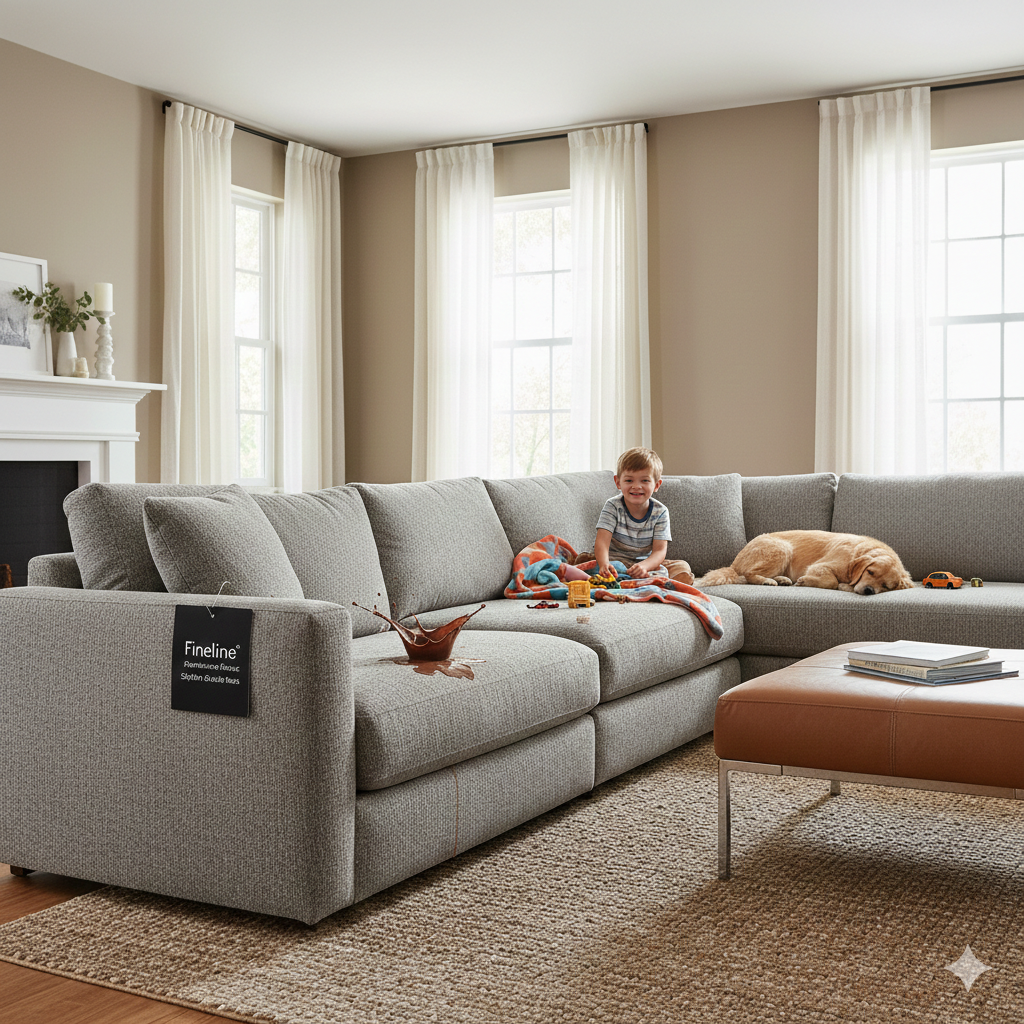
Most people choose upholstery fabrics based on how they look from a swatch. In many situations that method of fabric selection is completely fine. Where it doesn’t work so well however, in a busy household, for example, with children or pets, or for furniture that gets used every single day. The gap between what looks good and what actually lasts is where most reupholstery decisions can go wrong.
This guide covers the fabrics that hold up, the ones that do not, and the specific numbers you need to know before choosing. Ultimately, the recommendations presented by us at Fineline Upholstery are based on what we see in practice, not in theory.
Why Fabric Choice Matters More in High-Traffic Homes
Upholstered furniture in a busy household faces a different set of conditions than furniture in a spare bedroom or formal sitting room. The reality of daily usage includes liquid spills, pet claws, repeated sitting pressure, embedded dirt, and prolonged friction often all at once.
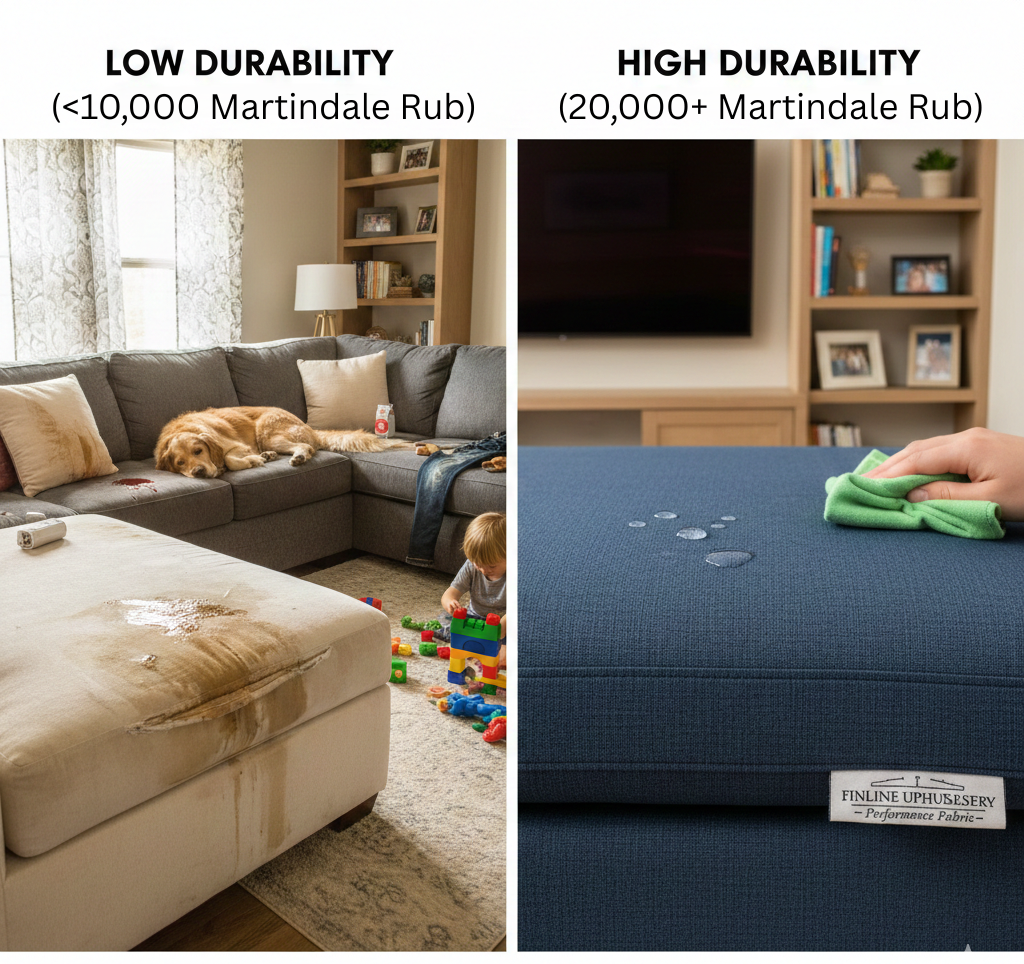
The furniture industry measure for fabric durability in the UK & Europe is the ‘Martindale Test’ which tests abrasion resistance by subjecting a fabric to a constant load while rubbing it against a standard wool abradant in a geometric wave pattern to simulate natural wear and tear.
- Under 3,000 Martindale Rubs: decorative use only; drapes, cushion covers, non-functional surfaces
- 3,000 to 9,000: light-duty, occasional-use furniture
- 9,000 to 20,000: everyday furniture with moderate use
- 20,000 and above: reasonably heavy-duty for general domestic usage, suitable for primary seating in busy homes
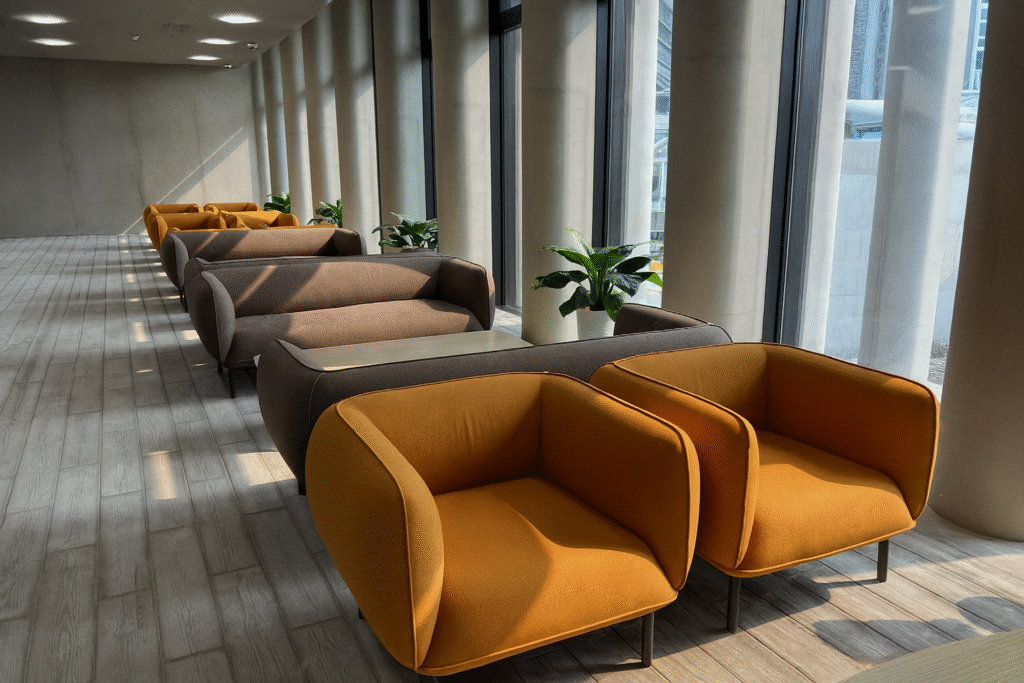
For commercial settings such as hotel lounges, restaurant seating & waiting rooms the durability threshold moves up to 30,000–50,000 double rubs. While the residential threshold is lower, the principle is the same: the higher the number, the more wear the fabric withstands before it starts to break down.
The single most common mistake we see: clients choosing a fabric rated under 10,000 Martindale rub for a sofa that gets 3–4 hours of use every day.
The Fabrics That Hold Up
Not all durable fabrics work the same way. Some resist staining but are vulnerable to pet claws. Others handle abrasion well but are difficult to clean. The following breakdown covers each material’s actual strengths and where it performs less well.
1. Easy Clean Ranges from Reputable Suppliers
Easy clean fabrics are a very viable choice when selecting fabric for high traffic areas and furniture which receives daily usage. The easy cleans generally boast a high domestic or commercial Martindale rub test rating. The key aspect is that many day-to-day spillages, marks and stains can simply be wiped away with just water. With leading fabric houses such as Designers Guild, Warwick & Villa Nova having complete easy clean ranges with both plain and pattered options the Easy Cleans should definitely be considered for busy household and regular use upholstery
2. Polyester and Polyester Blends
Polyester is the fabric most commonly used when durability and affordability are both required. As a pure synthetic, it does not absorb moisture in the way that natural fibres do, which makes it stain resistant by default. It also holds its colour well under UV exposure compared to cotton or linen.
3. Performance/Contract Fabrics (Agua, Camira, Spradling, Sunbrella, and Equivalents)
Performance/contract fabrics are purpose-engineered for high-use and high intensity environments. They were developed originally for commercial applications in the healthcare, hospitality, automotive and marine sectors. Now with increasing variations and ranges, due to manufacturing technologies becoming more widely available these brands have ranges which are comparable to the leading domestic upholstery fabric houses.
Performance fabrics cost more upfront. Over a 10-year span in a busy household, they typically save money by reducing cleaning costs and extending the point at which reupholstery becomes necessary.
4. Leather
Genuine leather does not absorb spills in the way that fabric does, liquid sits on the surface and wipes clean with a damp cloth. It does not retain pet odours, does not trap hair, and develops a natural patina over time that makes minor surface marks less visible rather than more.
5. Performance Velvet
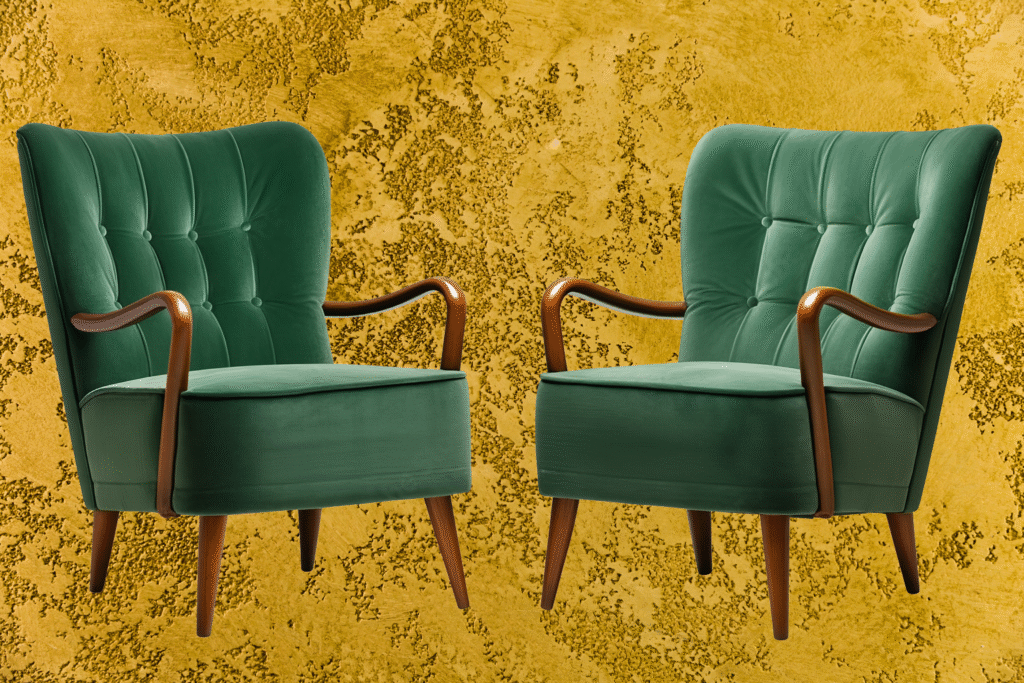
Traditional velvet is not suited to high-traffic use; it marks, flattens under pressure, and is difficult to clean. Performance velvet is a different product. It is engineered with synthetic fibres and a short, tight pile that holds its structure under wear. Stains bead on the surface rather than absorbing, and pet hair sits on the pile where it can be brushed or vacuumed off.
Performance velvet is the option for clients who want the look of velvet in a household where standard velvet would not last. The material is not indestructible, but it performs significantly better than its traditional counterpart in conditions of daily use, at Fineline, we would always recommend caution when selecting velvet as even the performance variation can be unforgiving in terms of marking and scuffing, velvet is simply more suited to occasional use furniture.
Fabrics That Do Not Belong in High-Traffic Spaces
Certain fabrics are frequently chosen for their appearance and are genuinely unsuitable for homes with children or pets. This is not about the fabric being low quality, it is about a mismatch between the material’s properties and the conditions it is being placed into.
Colour and Pattern: A Practical Note
Fabric selection is not only about material. Colour and pattern also affect how wear shows over time in everyday use.
Mid-tone colours; greys, warm taupe’s and earthy browns disguise daily soil more effectively than very light or very dark shades. Light colours show marks clearly. Very dark colours show dust, lint and pet hair equally clearly. Patterns and heathered textures serve a practical function: they break up the visual surface and make isolated stains far less visible.
This does not mean avoiding light or dark colours entirely. It means having clarity about what you are choosing and where the furniture is going to live.
Maintenance: What Extends Upholstery Life
Fabric choice sets the ceiling for how long upholstery lasts. Maintenance determines whether it gets close to that ceiling or falls well short. The following practices apply regardless of fabric type:
- Vacuum weekly: using an upholstery attachment. This removes surface dust and prevents dirt from working into the fibres where it causes abrasion.
- Address spills immediately: Blot, do not rub. Most stains are easier to remove within the first few minutes than after they have dried and set.
- Rotate cushions: regularly to distribute wear evenly across the fabric surface.
- Keep upholstered furniture out of direct sunlight: where possible, or use window treatments to filter UV exposure. Sunlight fades fabric over time, including fabrics rated for colourfastness.
- Professional cleaning once per year: is advisable for primary seating in busy households, particularly for velvet or leather surfaces. For performance fabrics, this is generally not required.
What We Recommend at Fineline Upholstery
Our recommendations are based on what we see when clients bring furniture in. The patterns are consistent enough that we can give clear guidance across different household types.
One final point: the frame and internal structure of your furniture are as important as the fabric. The best upholstery fabric in the world cannot compensate for a failing frame or worn-out foam. When you reupholster, take the opportunity to assess what is underneath; it is the part that determines whether the work lasts.
If you are working through a fabric decision for a reupholstery project and want a practical assessment of what will work in your home, we can provide straightforward advice. Give us the details; the furniture, the household, the conditions and we will guide and assist you towards making the ideal choice.
Our Services
Headboards/ Bedframes
Bespoke Loose Covers
Commercial Upholstery
Curtains & Blinds
Bespoke Upholstery
Bespoke Cushions

Our Location
Address: 63 New King’s Road, Fulham, London, SW6 4SE
Opening time:
Monday – Friday: 9:00am – 5:00pm
Saturday: 9:00am – 4:00pm
Sunday: Closed
Speak with the Team
020 7371 7073
info@finelineupholstery.co.uk
