Fineline Upholstery
Fineline Upholstery
Choosing the Right Cushion Insert: Foam, Feather, or Foam Core with Feather Wrap
The choice of cushion insert affects how furniture looks, how it feels to sit on, and how long it holds its appearance. Most people focus on fabric selection and overlook the internal construction entirely. This is a mistake. A well-chosen fabric on a poorly made cushion insert will still result in furniture that sags, flattens, or loses its shape within a few years.
At Fineline Upholstery, we offer three primary cushion insert options. Each has specific properties, price points, and suitability depending on the furniture type and how it will be used. This guide explains what each option provides and where it performs well.
Pure Foam Inserts
Foam cushion inserts are manufactured in three density grades, each suited to different applications within upholstered furniture. The density determines the firmness, the level of support, and how the cushion performs under regular use.
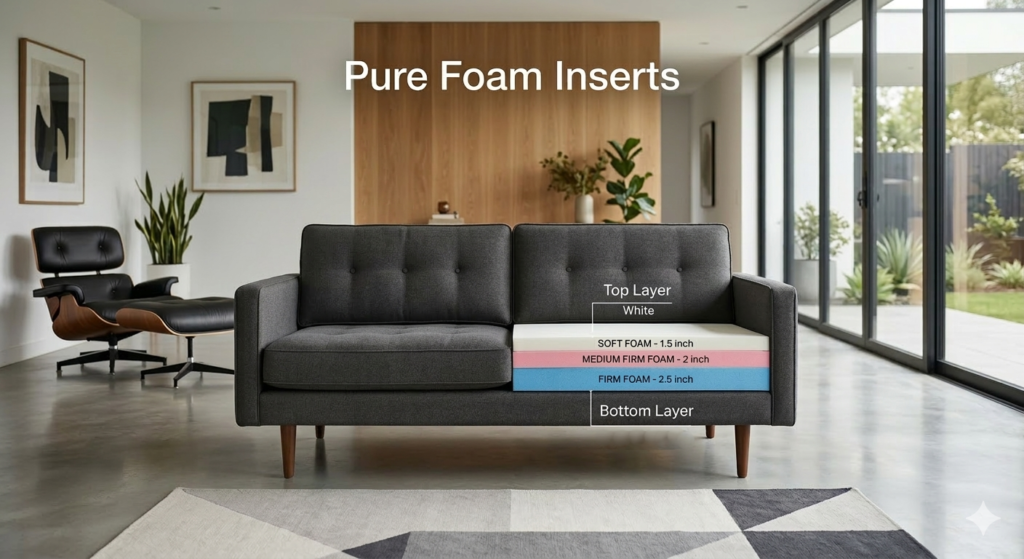
Firm foam (blue): This is the highest density option and is typically used in seat cushions where structural support is required, for example bench and window seat cushions. Firm foam holds its shape under body weight and is appropriate for furniture that receives daily use. It does not compress significantly over time and maintains defined edges and contours.
Medium firm foam (pink): This is the most commonly selected foam grade for seat cushions in domestic upholstery. It provides a balance between support and comfort. Medium firm foam is softer than the firm grade but retains enough structure to prevent excessive sagging in regular use.
Soft foam (white): Soft foam is used primarily for back cushions and in instances where a cushions support is less critical and comfort is the priority. It compresses more readily than the firmer grades and while it can be used for seat cushions it is a less common choice.
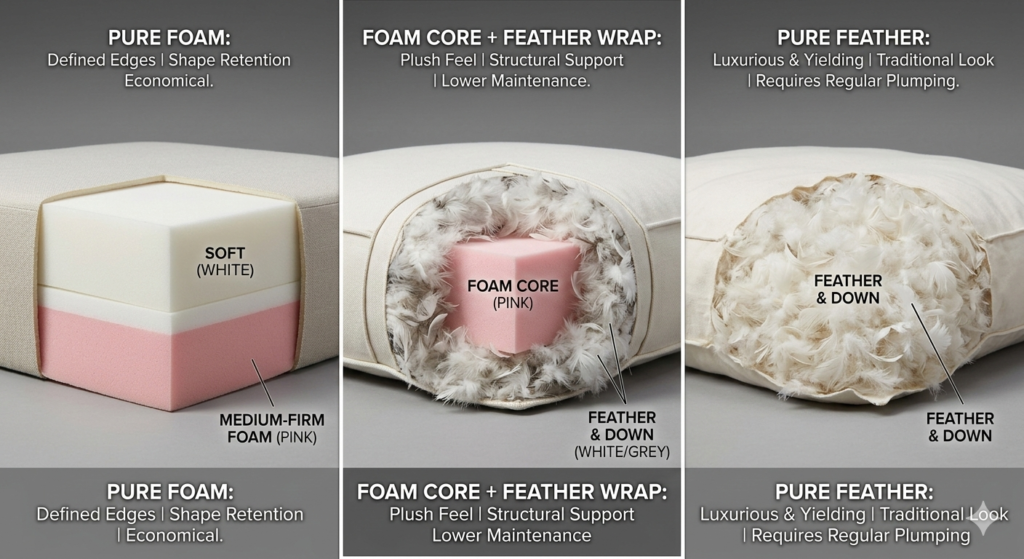
Cost: Pure foam is the most economical cushion insert option. The material cost is lower than feather or hybrid inserts, and the manufacturing process is straightforward.
Suitability: Foam inserts are particularly well suited to furniture with sharp contours, defined edges, and structured shapes. The material holds crisp lines and does not round off corners in the way that softer infill materials do. For mid-century modern designs, contemporary seating, or any furniture where geometric precision matters, foam is often the correct choice.
Longevity: High-quality foam retains its integrity for many years if correctly selected for the application. Foam that is too soft for the intended usage will compress and lose its shape. Foam that is appropriately matched to the furniture type and conditions of use performs consistently over time.
Pure Feather Inserts
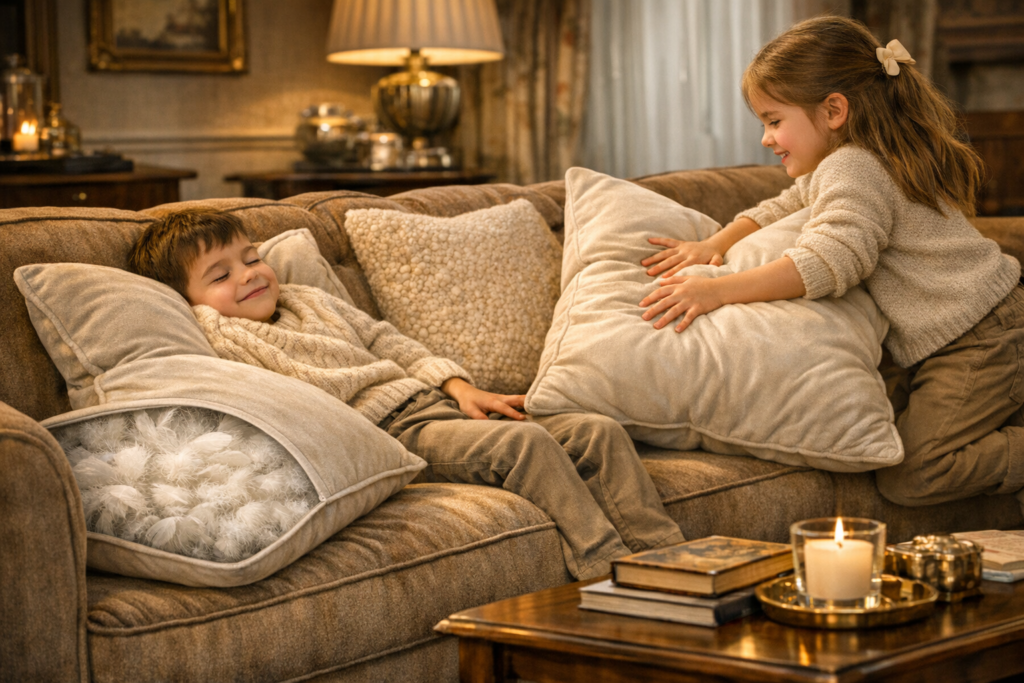
Feather cushions compress under body weight and mould to the shape of the user. They provide a yielding, enveloping feel that cannot be replicated with synthetic materials. The aesthetic is softer and contours are more rounded; feather cushions naturally develop a plush, inviting appearance.
Maintenance requirement: Feather cushions require regular plumping to redistribute the casing and maintain their shape. Without this, the feathers settle and the cushion flattens in areas of repeated use. This is not a defect; it is the inherent characteristic of the material.
Cost: Pure feather is the most expensive cushion insert option. The material cost is higher, and the construction process is more labour intensive than pure foam alternatives.
Suitability: Feather inserts are suited to traditional upholstery styles, where a softer, more relaxed aesthetic is appropriate. They work well in occasional-use seating, formal sitting rooms, or furniture where comfort takes precedence over structural precision. Feather cushions are less appropriate for furniture with sharp, defined lines, as the fill naturally rounds edges and softens contours.
Feather cushions are not recommended for households with young children or for furniture that receives intensive daily use. The maintenance requirement and the softer structural support make them less practical in these conditions.
Foam Core with Feather Wrap
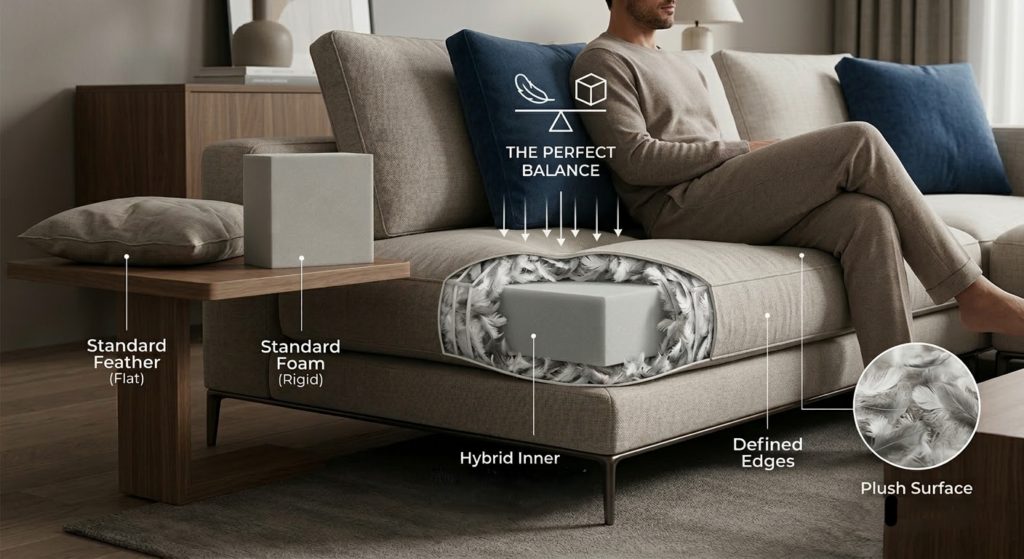
This is a hybrid construction that combines the structural support of foam with the soft surface feel of feather. A foam core is placed inside a bespoke hand-crafted case constructed with individual sections called ‘flights’ which keep the feather evenly distributed.
The foam core provides shape retention and support. The feather wrap provides the surface softness and aesthetic appearance of a pure feather cushion. The result is a cushion that feels plush and inviting but holds its shape and structure far better than pure feather alone.
Practical advantages: Foam core with feather wrap cushions require less maintenance than pure feather. The foam core prevents excessive flattening and maintains the cushion’s overall form. Regular plumping is still advisable, but the frequency is reduced compared to pure feather inserts.
Cost: This option sits between pure foam and pure feather in terms of price. It is more expensive than foam alone due to the feather wrap and the additional construction steps, but less expensive than pure feather.
Foam core options: Foam core with feather wrap can be manufactured using any of the three foam grades (firm, medium firm, or soft). The choice of foam density affects the overall firmness and support characteristics of the finished cushion. For seat cushions, medium firm or firm foam cores are typically specified. For back cushions, soft or medium density foam cores are appropriate.
Aesthetic result: These cushions provide a plush, rounded, and inviting appearance. The feather wrap creates the soft surface profile and visual fullness of a feather cushion, while the foam core maintains defined borders and prevents excessive rounding of edges. This makes them suitable for a wider range of furniture styles than pure feather.
Suitability: Foam core with feather wrap is a versatile option. It works well in both traditional and contemporary settings, in furniture that receives regular use, and in households where the maintenance demands of pure feather are not practical. It is often the recommended middle-ground for clients who want the feel and appearance of feather without compromising on structural longevity.
How the Three Options Compare
The following table summarises the key characteristics of each cushion insert type:
Practical Considerations
Furniture type matters: The style and construction of the furniture frame influence which cushion insert is appropriate. Structured, angular furniture typically requires foam to maintain clean lines. Traditional or softer-styled furniture can accommodate feather or foam-feather hybrid inserts.
Usage patterns matter: Furniture that is used daily for extended periods benefits from the structural support of foam or foam core inserts. Occasional-use furniture can accommodate pure feather if the aesthetic suits.
Client expectations matter: Some clients expect cushions to retain a crisp, tailored appearance at all times. Others are comfortable with a more relaxed, lived-in look. The choice of cushion insert should align with these expectations.
There is no single correct answer. The appropriate cushion insert depends on the specific furniture, the household conditions, and what the client values most in terms of comfort, appearance, and maintenance.
What We Recommend at Fineline Upholstery
We do not provide a fixed recommendation for cushion inserts without first understanding the specific furniture and how it will be used. The choice depends on multiple factors, and a decision made without context often results in a mismatch between expectation and outcome.
When clients are working through this decision, we ask about the furniture style, the intended use, the household conditions, and what matters most to them in terms of comfort and appearance. Based on that information, we provide clear guidance on which cushion insert option is most appropriate. We also have in store samples of each type of insert which clients are welcome to come in and test.
For most domestic seating in regular use, foam core with feather wrap provides the best balance of comfort, appearance, and practicality. For furniture with structured, geometric designs, pure foam is typically the correct choice. For traditional furniture in lower-traffic settings where maintenance is not a concern, pure feather remains a valid option.
If you are reupholstering furniture or commissioning new pieces and are uncertain which cushion insert is appropriate, we can provide straightforward advice based on the specifics of your situation. Give us the details and we will guide you towards the option that will work best.
Our Services
Headboards/ Bedframes
Bespoke Loose Covers
Commercial Upholstery
Curtains & Blinds
Bespoke Upholstery
Bespoke Cushions

Our Location
Address: 63 New King’s Road, Fulham, London, SW6 4SE
Opening time:
Monday – Friday: 9:00am – 5:00pm
Saturday: 9:00am – 4:00pm
Sunday: Closed
Speak with the Team
020 7371 7073
info@finelineupholstery.co.uk
