Fineline Upholstery
Fineline Upholstery
How Long Should Quality Upholstery Last? The Honest Answer
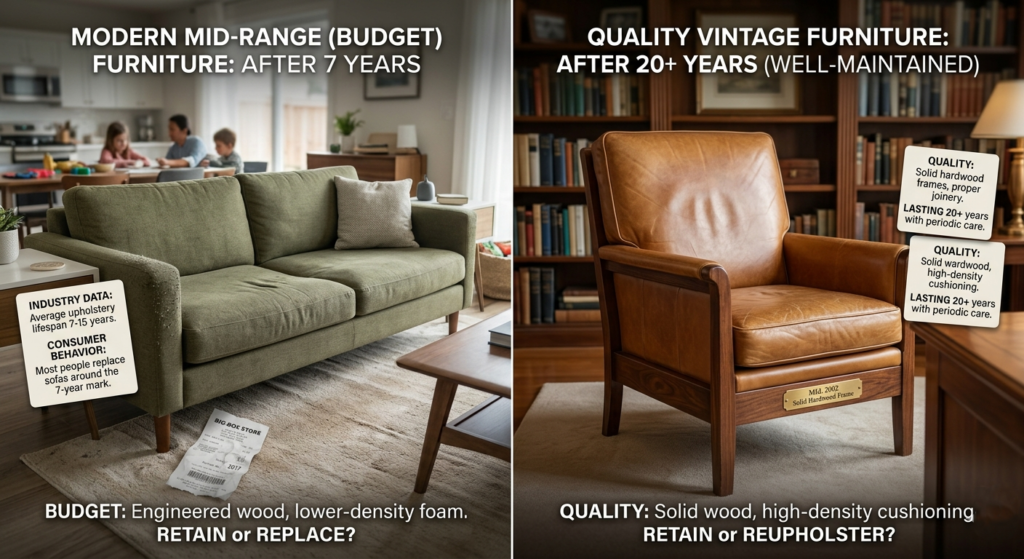
The question appears simple. The answer is not. Industry data places the average upholstery lifespan between 7 and 15 years. Consumer behaviour research suggests that most people replace sofas around the 7-year mark. Real-world experience shows quality furniture constructed with solid hardwood frames and proper joinery lasting 20 years, 30 years, or longer.
The gap between these numbers is not arbitrary. It reflects differences in construction quality, material selection, household conditions, and maintenance practices. This article examines what determines upholstery longevity, what the data shows, and where expectations meet reality.
What the Numbers Actually Show
Furniture industry publication Furniture Today reports that the average consumer keeps a sofa for approximately 7 years. Consumer surveys place the average age of sofas in active use at 6 to 7 years. This does not mean the furniture has structurally failed at that point. It means that is when most people choose to replace it.
Industry assessments of expected upholstery lifespan span a wider range. Budget furniture constructed from engineered wood and lower-density foam typically lasts 5 to 7 years before showing significant structural wear. Mid-range furniture with mixed construction can be expected to last 8 to 12 years. Quality furniture built from solid hardwood with proper spring systems and high-density cushioning typically lasts 12 to 15 years, and can exceed 20 years with periodic reupholstery.
The distinction matters: the 7-year replacement cycle reflects consumer behaviour, not the structural limits of well-constructed furniture. Multiple factors drive replacement decisions beyond physical deterioration, including style changes, household moves, and the perception that furniture should be replaced rather than restored.
Frame Construction: The Determining Factor
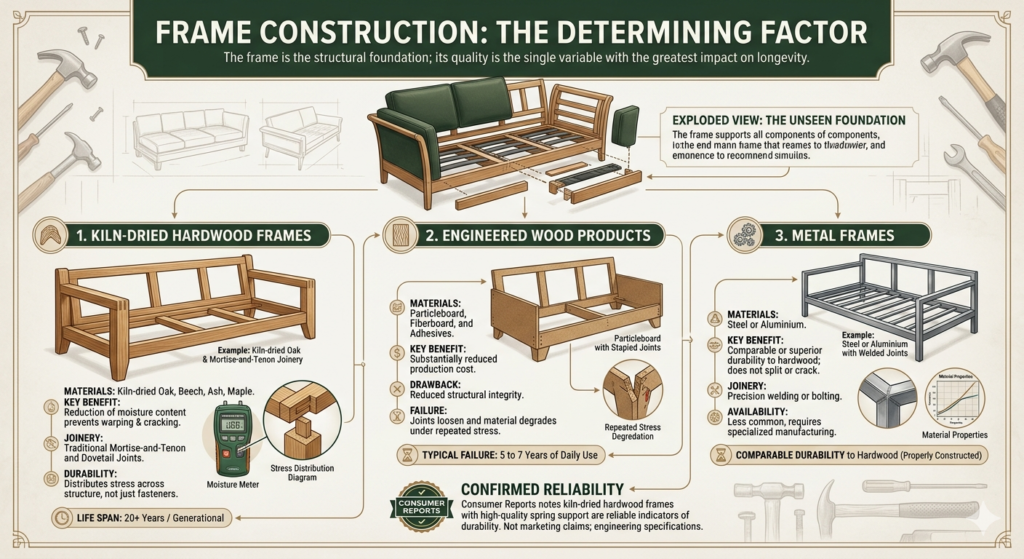
The frame is the structural foundation. Everything else in the furniture; springs, padding, fabric can be replaced or restored. If the frame fails, the furniture fails. Frame quality is the single variable with the greatest impact on longevity.
Kiln-dried hardwood: Frames constructed from kiln-dried oak, beech, ash, or maple joined with mortise and Tenon joinery or dovetail joints represent the standard for long-term durability. Kiln drying reduces moisture content to prevent warping and cracking. Traditional joinery distributes stress across the joint structure rather than relying on mechanical fasteners alone. This construction method is labour-intensive and therefore cost-prohibitive in mass production.
Engineered wood products: Particleboard, fibreboard, and other composite materials are manufactured from wood particles bonded with adhesive. These materials reduce production cost substantially. They also reduce structural integrity. Under repeated stress, sitting down, standing up, shifting weight the joints loosen and the material degrades. Particleboard frames typically fail within 5 to 7 years under daily use conditions.
Metal frames: Steel or aluminium frames are less common in domestic upholstery but offer comparable or superior durability to hardwood when properly constructed. Metal does not split or crack in the way wood can. The primary limitation is that metal frames require specialised manufacturing equipment, which limits their availability in traditional upholstery.
Consumer Reports notes that kiln-dried hardwood frames with high-quality spring support are among the most reliable indicators of durable furniture construction. These are not marketing claims. They are engineering specifications that determine how the furniture responds to repeated mechanical stress.
Spring Systems and Internal Support
The support system beneath the cushions distributes weight and maintains structural shape. Different spring configurations perform differently under use.
Eight-way hand-tied coil springs: This is traditional upholstery construction. Individual coil springs are hand-tied to each other and to the frame in eight directions, creating an interconnected support structure. The process is labour-intensive. The result is a support system that distributes weight evenly across the seating surface and maintains its integrity for decades. Furniture constructed with hand-tied springs can be expected to last 15 to 20 years or more before the springs require retightening.
Sinuous wire springs (serpentine springs): These S-shaped wire springs run from front to back of the frame and are secured with clips. They provide adequate support and are less expensive to install than coil springs. Sinuous springs typically maintain their support for 8 to 12 years under normal use conditions. They are an acceptable mid-range option but do not match the longevity of hand-tied coils.
Elastic webbing: Elastic straps stretched across the frame provide the simplest and least expensive support system. They lose tension relatively quickly typically within 3 to 5 years in furniture that receives daily use. Webbing is appropriate for occasional-use furniture but not for primary seating in busy households.
Cushion Fill and Foam Density
Cushion fill determines comfort, support, and how well the furniture maintains its shape over time. Foam density is measured in kilograms per cubic metre. Higher density foam costs more to manufacture. It also lasts substantially longer.
High-density foam (35 kg/m³ and above): This grade of foam maintains its resilience for 10 to 15 years under normal use. It recovers its shape after compression and does not develop permanent indentations in areas of regular use. High-density foam is specified in quality furniture where longevity matters.
Standard-density foam (25 to 30 kg/m³): This is the most commonly used foam grade in mid-range furniture. It provides adequate support for 5 to 8 years before showing noticeable compression and loss of resilience. It represents a compromise between cost and performance.
Low-density foam (below 25 kg/m³): Budget furniture typically uses low-density foam. It begins to lose support within 3 to 5 years and develops permanent sagging in high-use areas. This is the foam grade that contributes to the 5 to 7 year replacement cycle in inexpensive furniture.
Foam quality is rarely disclosed at the point of sale. Manufacturers of budget furniture avoid specifying foam density because it reveals the expected lifespan limitations. If foam density is not provided, the furniture is almost certainly constructed with standard or low-density foam.
Upholstery Fabric and Material Lifespan
Fabric determines how the furniture ages visually. Different materials respond to friction, spills, and UV exposure in different ways.
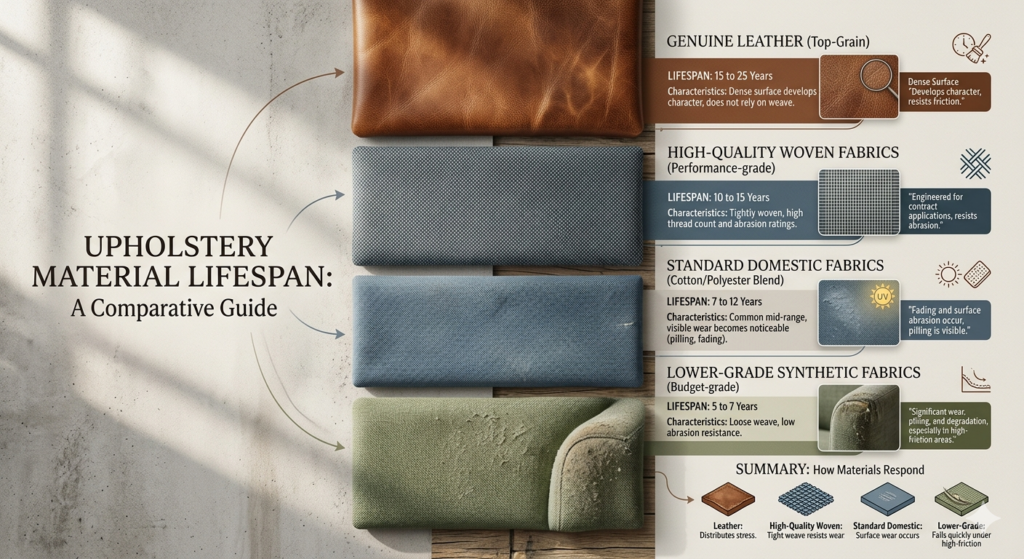
Leather: Genuine leather upholstery typically lasts 15 to 25 years when properly maintained. Leather does not rely on a woven structure that can degrade through friction. Instead, it forms a dense surface that develops character over time rather than showing wear. Top-grain and full-grain leather offer the longest lifespan. Split-grain and bonded leather degrade more quickly and are not appropriate for long-term use.
High-quality woven fabrics: Tightly woven fabrics with high thread counts and abrasion ratings typically last 10 to 15 years. The fabric lifespan depends on the fibre content, weave density, and conditions of use. Performance fabrics engineered for contract applications often exceed domestic furniture in durability.
Standard domestic fabrics: Cotton blends, polyester, and other common upholstery fabrics used in mid-range furniture typically show visible wear within 7 to 12 years. This does not mean the fabric has failed structurally, but that pilling, colour fading, and surface abrasion become noticeable.
Lower-grade synthetic fabrics: Budget furniture often uses synthetic fabrics with loose weaves and low abrasion resistance. These materials can show significant wear within 5 to 7 years, particularly in high-friction areas such as seat surfaces and armrests.
Usage Conditions and Household Variables
Industry standards assume 2 to 3 hours of daily use when specifying furniture durability. This is the baseline scenario most manufacturers design for. Real household usage varies substantially from this assumption.
A sofa in a formal sitting room used only when guests visit may see one or two hours of use per week. Under these conditions, even mid-range furniture can last 15 to 20 years. The same sofa placed in a family room where it serves as primary seating for television viewing, working from home, and children’s activities may receive 6 to 8 hours of daily use. This level of use accelerates wear proportionally.
Pets: Dogs and cats reduce upholstery lifespan through clawing, shedding, and the introduction of oils and odours into the fabric. Furniture industry sources identify pets as the single largest variable affecting upholstery longevity in domestic settings.
Children: Young children subject furniture to impacts, spills, and staining that adult-only households typically avoid. Furniture in households with children under 12 can be expected to show cosmetic wear earlier than equivalent furniture in adult-only homes, even when the structural components remain sound.
Environmental factors: Direct sunlight causes fabric fading and leather cracking. High humidity environments accelerate material degradation. Furniture placed in direct sun exposure can show visible deterioration within 3 to 5 years regardless of material quality.
Maintenance and Care Impact
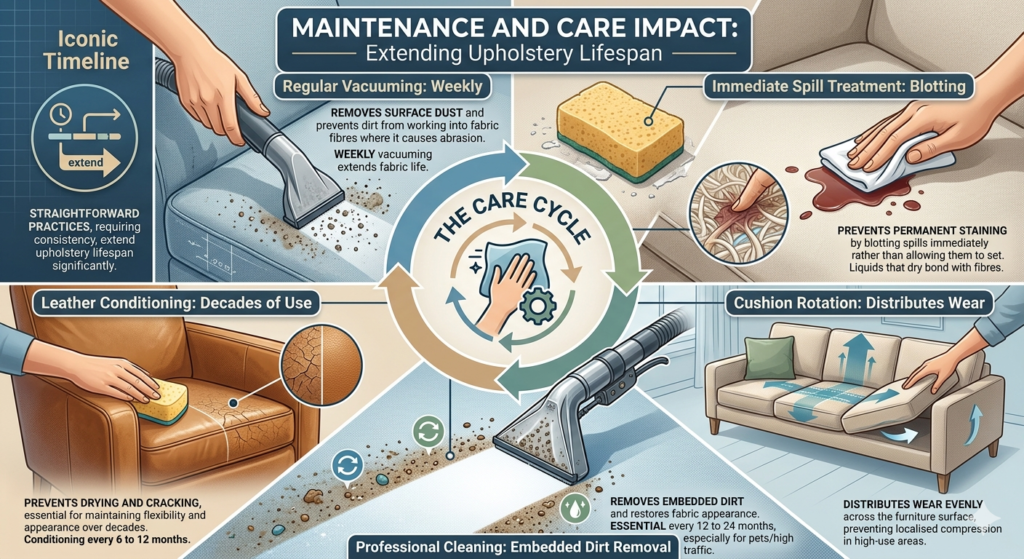
Maintenance extends upholstery lifespan. The practices are straightforward but require consistency.
Regular vacuuming: Weekly vacuuming with an upholstery attachment removes surface dust and prevents dirt from working into fabric fibres where it causes abrasion. This single practice can extend fabric life by several years.
Immediate spill treatment: Blotting spills immediately rather than allowing them to set prevents permanent staining. Most fabric staining occurs when liquids are allowed to dry and bond with fibres.
Cushion rotation: Rotating and flipping cushions distributes wear evenly across the furniture surface. This prevents localised compression in high-use areas and extends the period before cushions require replacement.
Professional cleaning: Professional upholstery cleaning every 12 to 24 months removes embedded dirt and restores fabric appearance. This is particularly important for furniture in high-traffic areas or households with pets.
Leather conditioning: Leather furniture requires conditioning every 6 to 12 months to prevent drying and cracking. This practice is essential for maintaining leather’s flexibility and appearance over decades of use.
When Wear Is Cosmetic vs Structural
Not all visible wear indicates structural failure. Distinguishing between cosmetic aging and structural deterioration determines whether furniture requires reupholstery or replacement.
Cosmetic wear: Fabric fading, pilling, surface staining, and minor scratches on leather are cosmetic issues. If the frame remains solid and cushions retain reasonable support, the furniture is a candidate for reupholstery. The structural components that determine longevity are still functional.
Structural deterioration: Creaking or wobbling frames, permanent cushion sagging that cannot be corrected by refilling, broken or collapsed springs, and joints that have separated from the frame indicate structural failure. At this point, repair becomes uneconomical unless the frame is high-quality hardwood construction that can be properly restored.
Many people replace furniture when only the fabric has worn. The frame, springs, and structural components may have another 10 to 15 years of life remaining.
Realistic Expectations by Price Point
Price correlates with construction quality, though not perfectly. Understanding what different price brackets typically deliver helps set appropriate expectations.
Budget furniture (under £500 for a standard sofa): Expect particleboard or softwood frames, low-density foam, elastic webbing or basic sinuous springs, and lower-grade synthetic fabrics. Realistic lifespan: 5 to 7 years before replacement becomes necessary. These pieces are not designed for long-term use.
Mid-range furniture (£500 to £1,500): Typically includes mixed construction — some solid wood components combined with engineered wood, standard-density foam, sinuous springs, and mid-grade upholstery fabrics. Realistic lifespan: 8 to 12 years with proper care. These pieces can be reupholstered once if the frame holds up.
Quality furniture (£1,500 and above): Should include kiln-dried hardwood frames with proper joinery, hand-tied or high-quality spring systems, high-density foam or down-wrapped cushioning, and durable upholstery materials. Realistic lifespan: 15 to 20 years or more, with multiple reupholstery cycles possible. These pieces are investments that can last decades.
Price alone does not guarantee quality. Some manufacturers charge premium prices for furniture with mid-range construction. Frame material, spring type, and foam density are more reliable indicators of longevity than price tag.
What We See at Fineline Upholstery
The furniture that comes into our workshop for reupholstery ranges from antique pieces manufactured in the 1900s to items purchased within the last 5 years. The pattern is consistent. Furniture constructed with solid hardwood frames and traditional joinery typically arrives for its first reupholstery after 12 to 18 years of use. The frames remain sound, the springs require minor adjustment, and the furniture has another 10 to 15 years of life once the fabric and padding are replaced.
Furniture constructed with particleboard frames and low-density foam rarely arrives for reupholstery. These pieces are discarded after 5 to 8 years because the frame integrity has failed. The cost of attempting to repair the structure exceeds replacement cost.
Common observations: Furniture that receives daily use in households with children or pets shows accelerated fabric wear but the underlying structure remains intact if properly constructed. Leather furniture typically arrives for reconditioning and minor repairs rather than full reupholstery. Well-maintained Victorian and Edwardian furniture still in active use demonstrates that construction quality has a ceiling measured in generations, not years.
When clients ask how long their furniture should last, the honest answer depends on what was purchased. If the frame is solid hardwood with proper joinery, the furniture can last 20 to 30 years with periodic reupholstery. If the frame is particleboard, expect 5 to 7 years before structural failure regardless of how carefully it is maintained.
We assess each piece individually. If the frame justifies the cost of reupholstery, we proceed. If the structure cannot support another 10 years of use, we advise replacement. The goal is not to perform reupholstery work that will fail within a few years because the underlying construction was inadequate from the start.
If you are uncertain whether your furniture is worth reupholstering, bring photos or the piece itself. We can assess frame condition, spring integrity, and whether the structure has sufficient life remaining to justify restoration costs.
Our Services
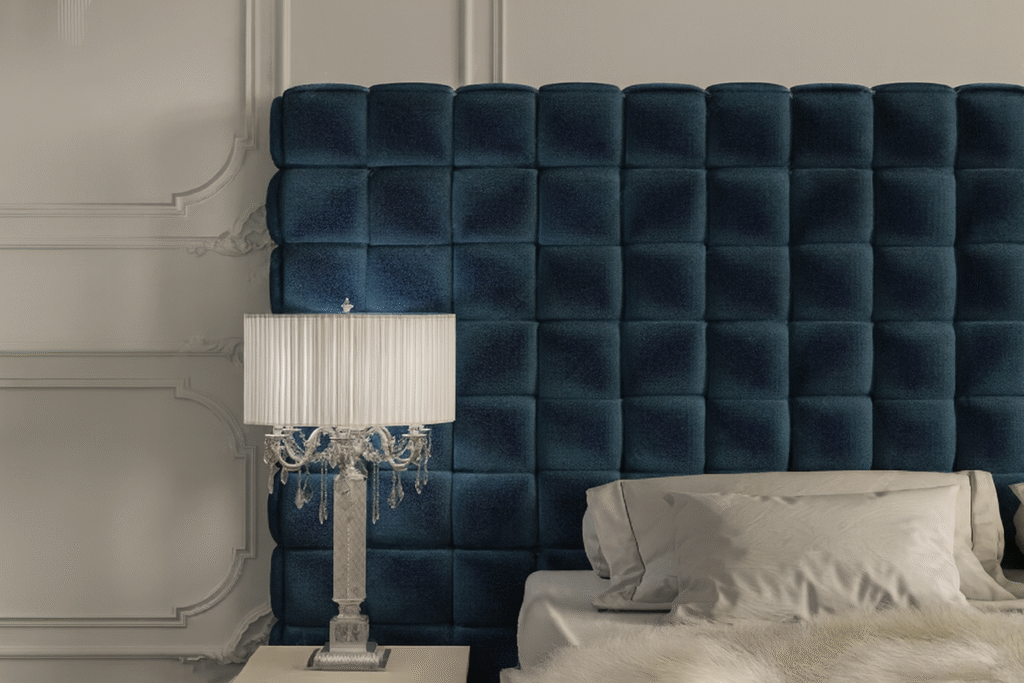
Headboards/ Bedframes
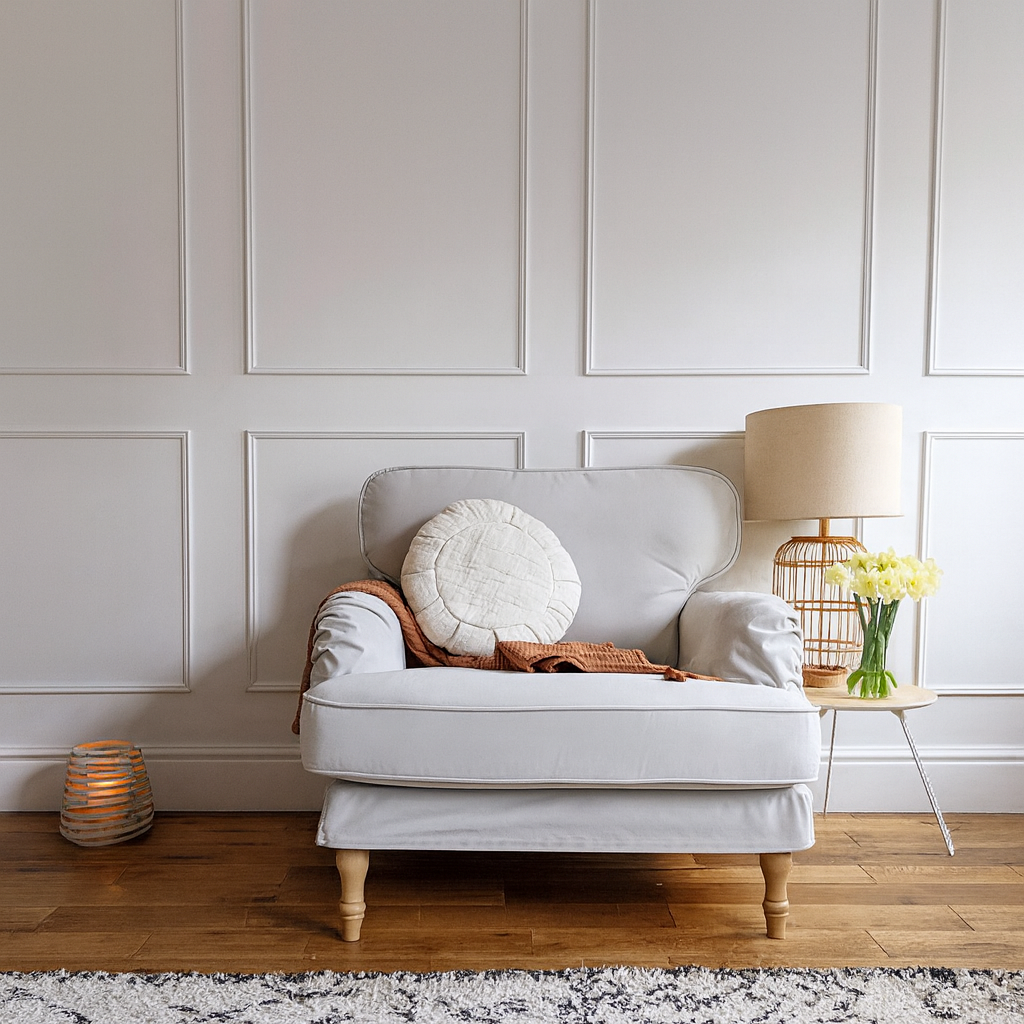
Bespoke Loose Covers
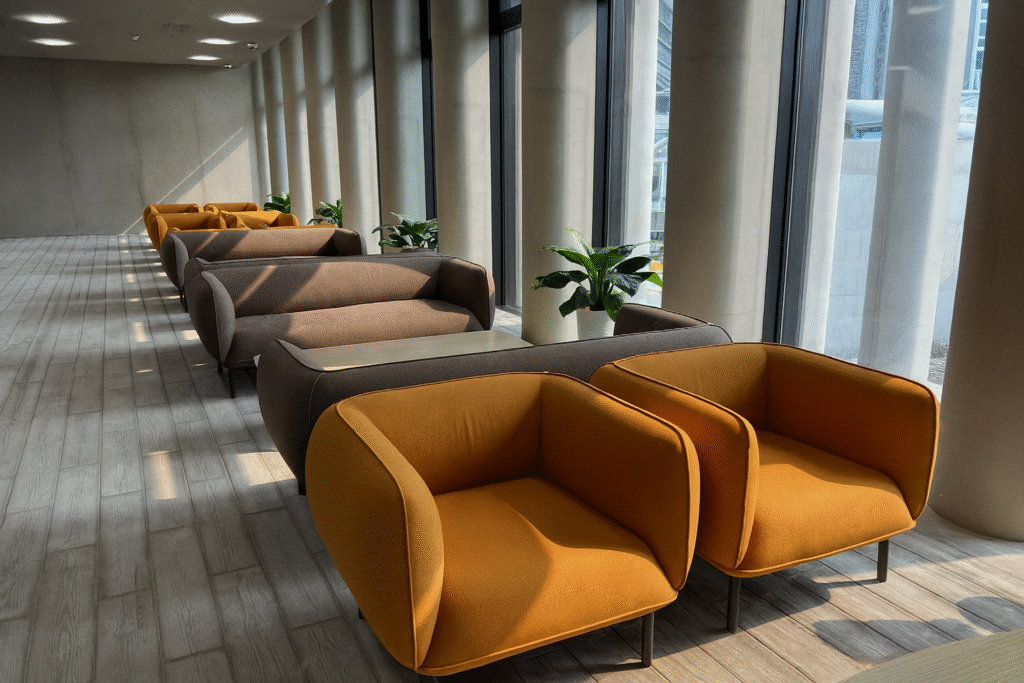
Commercial Upholstery
Curtains & Blinds
Bespoke Upholstery
Bespoke Cushions
EXCELLENTTrustindex verifies that the original source of the review is Google. Fineupholstery are wonderful. I have used their services before. I took in an old and very interesting chair for them to re-cover. It was quite complicated and they have done an excellent job. I am thrilled with the new look. And they were so helpful with fabric choice. I felt looked after and will happily to continue using their expert recovering services again. Thank you to all.Posted on GoogleTrustindex verifies that the original source of the review is Google. I contacted Fineline Upholstery to ask for some help with a damaged sofa. They were very prompt, asked for all the necessary details in one email so that once that was provided they could provide a quote and then come and carry out the work. It was effortless and I am very happy with their speed and professionalism. I would definitely use them again.Posted on GoogleTrustindex verifies that the original source of the review is Google. Excellent service and beautifully reupholstered armchair. Top job from beginning to end. Thank you!Posted on GoogleTrustindex verifies that the original source of the review is Google. Friendly, reliable and excellent craftsmanship! Thanks v much :) love our “new” furniturePosted on GoogleTrustindex verifies that the original source of the review is Google. It’s not just the quality of the upholstery, which is absolutely outstanding, but also the excellent customer service. All done really efficiently with updates at every stage.Posted on GoogleTrustindex verifies that the original source of the review is Google. It was a pleasure dealing with Fineline Upholsterers. Their work is of the highest standard and we were delighted with their speedy, prompt and excellent service. I would highly recommend them.Posted on GoogleTrustindex verifies that the original source of the review is Google. I dumped a whole pile of unsatisfactory sofa seat cushions in the workshop. 2 weeks later they were delivered home all pristine and plumped. So easy. So efficient. I can’t wait for my next project!Posted on GoogleTrustindex verifies that the original source of the review is Google. Highly recommended! Fineline Upholstery could not have done more to help. We had a bed that unfortunately got damaged during a house move. Collection, return and reassembly were all carried out efficiently and professionally. The quality of the reupholstered bed could not have been better. We will certainly use again.Posted on GoogleTrustindex verifies that the original source of the review is Google. Excellent service courteous and extremely efficient. Thank you Min. Delighted with the cushions beautifully made and ready much earlier than expected. Thank you Chris.Posted on GoogleTrustindex verifies that the original source of the review is Google. Can’t recommend this company highly enough! Have now used them twice: re-padding and re-upholstery of antique dining chairs and re-upholstery of new chaise. The results were brilliant, excellently made and the customer service responsive, attentive and very efficient. Prices are fair and reasonable. Thankyou!


Our Location
Address: 63 New King’s Road, Fulham, London, SW6 4SE
Opening time:
Monday – Friday: 9:00am – 5:00pm
Saturday: 9:00am – 4:00pm
Sunday: Closed
Speak with the Team
020 7371 7073
info@finelineupholstery.co.uk
