Fineline Upholstery
Fineline Upholstery
Different Types of Finishing: Trims, Piping, Fringing, and Decorative Nails
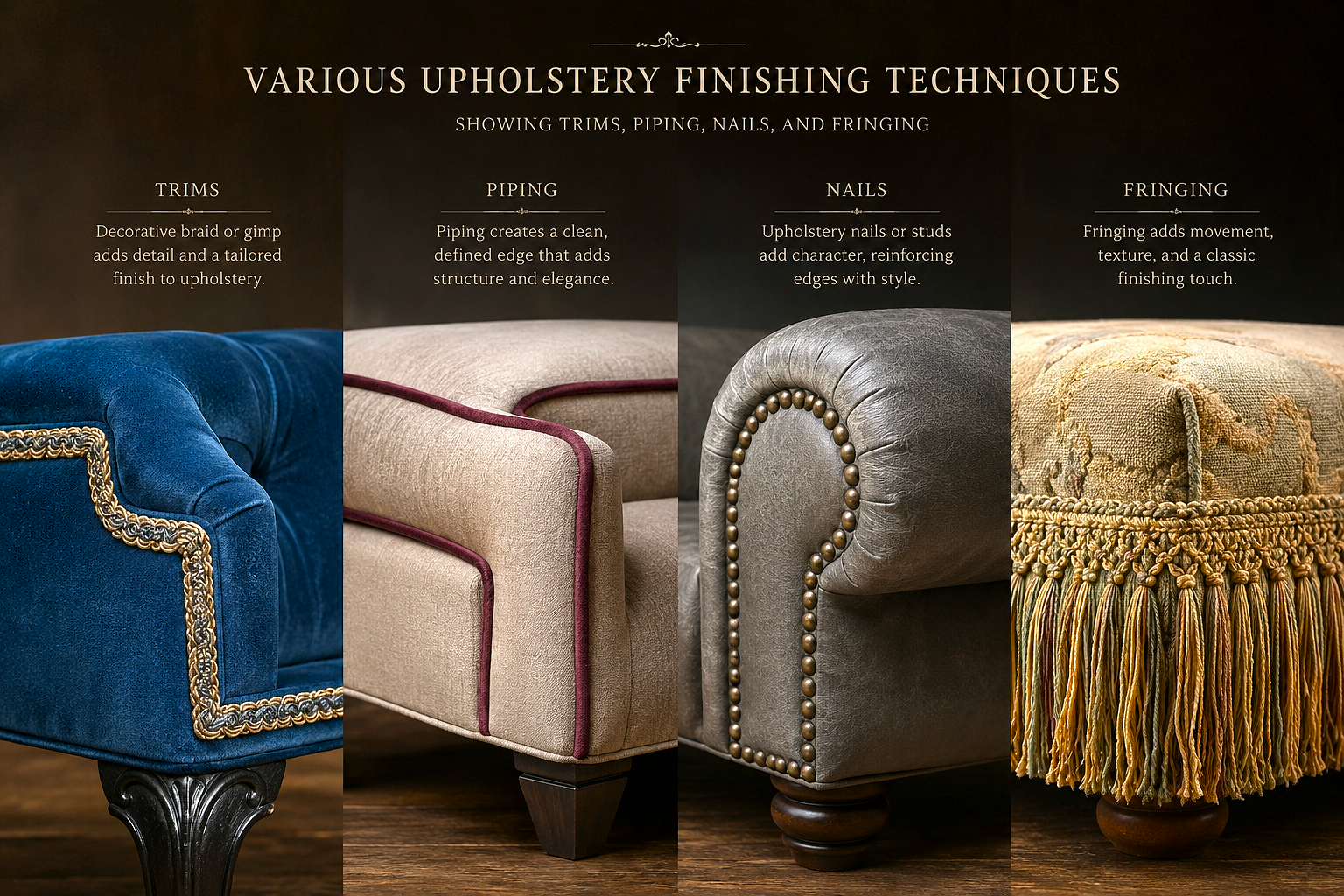
The finishing of upholstered furniture extends beyond the fabric itself. Edge treatments, decorative details, and trim options serve important practical and aesthetic functions simultaneously. Understanding the available options clarifies why specific finishes are appropriate for different applications, different aesthetic directions, and different durability requirements. The choice of finishing affects both how the furniture will age and what visual impression it communicates.
This article examines the primary finishing techniques used in upholstery work: trims, piping, fringing, and decorative nails. The focus is on practical function, application considerations, and how each option affects both appearance and long-term performance.
Piping and Welting: Structure and Decorative Definition
Piping, also called welting or cording, consists of fabric-covered cord sewn into seams. The cord provides a raised edge that defines the line between different fabric sections. Piping serves both functional and aesthetic purposes simultaneously.
Structural function: When sewn into seams at cushion edges or where fabric panels meet, piping reinforces the seam and acts as a buffer between the sewn seam and the outside environment. This protection reduces fraying, extends seam life, and improves durability under regular use. Industry sources note that piping sewn into seams helps fabric withstand daily use by becoming a protective barrier.
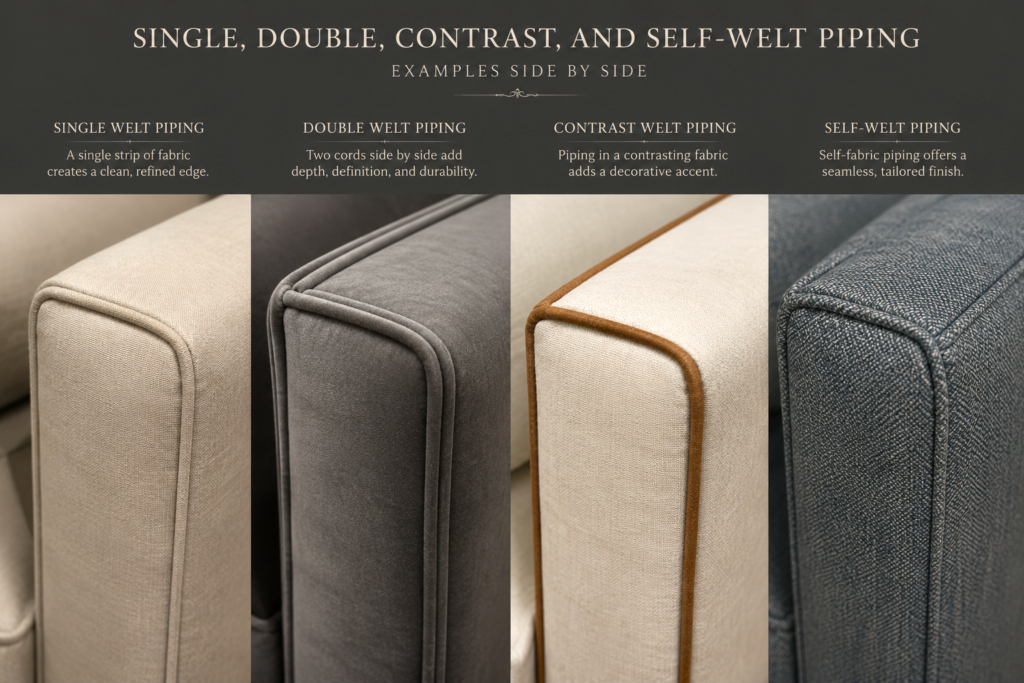
Aesthetic varieties: Single welt involves one row of piping providing subtle accent. Double welt uses two parallel rows of piping cord for more pronounced decorative effect, often seen in high-end or traditional upholstery. Contrast piping uses piping in different fabric or colour to create striking visual appeal by defining contours. Self-welt uses piping made from the same fabric as the upholstery for seamless appearance. Each option communicates different aesthetic intention.
The fabric covering the cord is generally cut on the bias but can be cut straight depending on drape requirements. Lighter weight fabrics work better for double piping because they wrap more easily around multiple cords. Custom piping made from matching fabric communicates more cohesive, professional design than store-bought alternatives.
Trim, Gimp, and Braid: Edge Concealment and Decoration
Trims serve to conceal and protect raw edges where upholstery fabric meets the furniture frame. This is particularly important when the wooden frame edge is visible or when staples require covering. Multiple trim categories exist, each appropriate for different frame styles and aesthetic directions.
Gimp and braided trim: Gimp consists of narrow decorative ribbon or braid, often featuring wavy, scrolled, geometric, or striped patterns. It conceals raw fabric edges and staples along furniture edges. Gimp works particularly well where the wood frame is delicate and the fabric lip is shallow or absent. Traditional upholsterers often call this ‘braid.’ Multiple colours and patterns are available, from subtle single-colour to highly decorative multi-colour designs.
Ribbon and decorative tape: Ribbon trims provide simple but varied options in many colours and styles. These are particularly useful for contemporary designs seeking clean, linear finishing without pattern complexity. Ribbon trims also serve a protective function, preventing fabric fraying and concealing structural elements.
Trim attachment requires careful application. A thin line of adhesive is applied to the underside, and the trim is pressed firmly and evenly along the edge. Overlapped joints are folded to hide seams. The application process requires attention to ensure neat, aligned trim that does not pull or wrinkle. Professional installation produces results that amateur application may not achieve.
Decorative Nails and Studs: Historical Function and Modern Use
Decorative upholstery nails, often called studs or upholstery tacks when emphasising the domed head shape, have functional origins and contemporary aesthetic value. Early upholstered chairs used heavy leather fixed with large nails around edges to secure and shape the material. The technique eventually evolved into a design element.
Historical context: Heavy, raised-head nails were required to fix thick leather and hold it securely in position on wooden frames. Brass nailing became popular during the 18th century, and brass continues to be one of the most traditional finishes. The look and finish of brass remains popular, especially in the upholstery of traditional and antique pieces.
Modern finishes and styles: Contemporary options include brass, antique brass, nickel, black, pewter and renaissance as well as decorative finishes with embossed patterns. Available sizes range from small discrete pins to larger statement nails. Individual nails allow complete spacing control but require more labour to install. Nail-head trim strips have nails pre-attached at fixed spacing, requiring fewer individual hammering points to secure the entire trim.
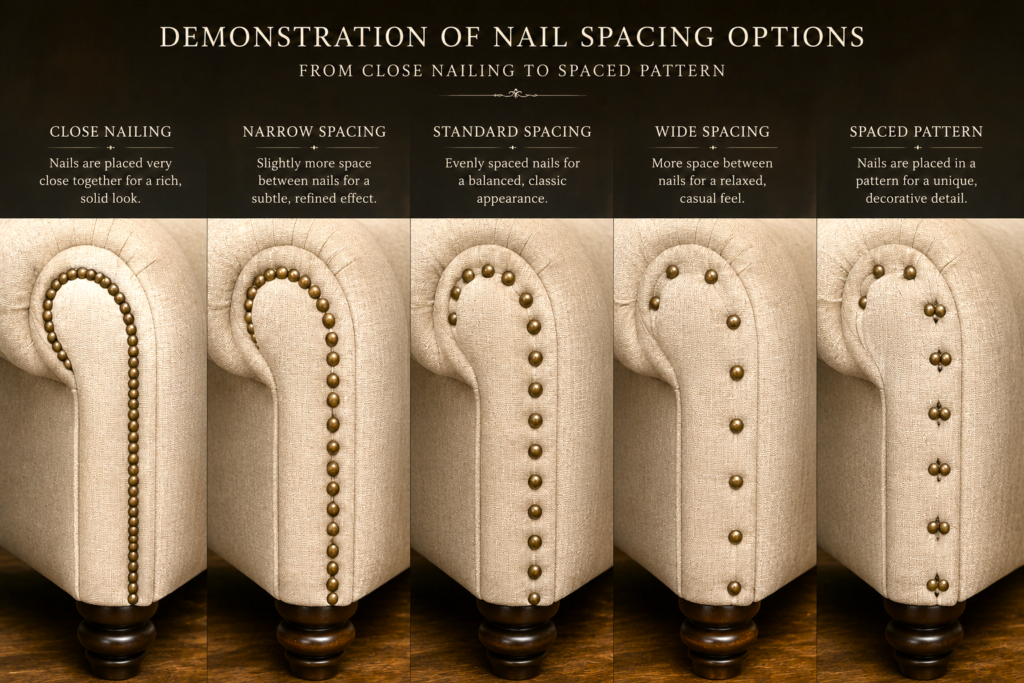
Installation considerations: Spacing varies based on project and desired look. Close nailing refers to continuous lines with heads just touching. Wider spacing is also an option and tends to be used with larger size nails. A tack hammer with small head is most appropriate for upholstery application, as it provides precision when driving nails into padded surfaces. For nail-head trim, installation requires tacking only every five nail-heads, reducing hammering labour while maintaining even appearance.
Fringing and Tassels: Decorative Movement and Historical Significance
Fringing consists of decorative trim with hanging strands or small tassels along an edge. The format includes a header, the narrow band sewn onto the main fabric, and multiple vertical strands grouped into individual elements. These can be evenly spaced or densely packed depending on style.
Types of fringe: Ball fringe features small spheres hanging along the trim header. Brush fringe consists of fine strands creating a softer, more delicate appearance. Tassel fringe provides hanging tassels that create movement and texture. Bullion fringe uses twisted cord elements. Hand-tied tassel fringe represents premium construction with individually hand-tied tassels. Available lengths range from 2.5 inches to 4 inches, with longer tassels creating a more dramatic and luxurious appearance while shorter lengths provide subtle accent.
Durability and application: Fringing works best for decorative rather than high-traffic applications. Tassel fringe specifically is noted as best suited for low-wear decorative uses. For upholstery durability, fringe should be sewn rather than glued, particularly for items receiving regular use. Material compatibility matters, sturdy fabrics like leather or heavy wool provide excellent support preventing fraying, while delicate materials like silk require careful handling. Material content affects performance: polyester blends provide fade resistance and affordability, while silk or rayon offer rich texture and luster.
Historically, fringe and tassels held cultural significance. In ancient Egypt, tassels symbolised rank and status, adorning clothing and ceremonial objects. European aristocratic fashion featured elaborate trims and fringes on garments and draperies, showcasing wealth and taste. Contemporary use shifted from symbols of status to popular design elements available for varied applications.
Selecting Finishing Options: Practical Considerations
The choice of finishing option depends on furniture type, intended use, style direction, and durability requirements. No single option is universally superior. Different choices serve different purposes.
Formal and traditional aesthetics: Double welt piping, gimp paired with nail-heads. Brass or antique brass nail finishes communicate traditional and formal design directions. These combinations often appear on antique reproductions and period-style furniture. The elements work together to create cohesive historical aesthetic.
Contemporary and minimalist approaches: Self-welt piping or contrast piping in complementary colours, without additional trim or nails, creates clean, modern appearance. Single piping rather than double provides definition without ornamental emphasis. These approaches prioritise line and seam structure over decorative elaboration.
Playful and textured designs: Ball fringe, brush fringe, or tassel fringing combined with contrasting piping creates movement and visual interest. These finishes work well in spaces where decorative personality matters more than formal parameters. Fringing provides both texture and movement that static trim options do not offer.
Durability requirements must be considered in regards to functional furniture. High-traffic pieces benefit from piping’s structural reinforcement over purely decorative trim. Fringing is suitable primarily for low-wear applications, works well for decorative pillows or formal seating which is used occasionally. Nail-head trim performs both functional and decorative roles and tolerates regular use without deterioration.
The choice of finishing reflects design intention, functional requirements, and how the furniture will be used. Durability and aesthetics are often equally important in determining appropriate selections.
How We Approach Finishing Selection at Fineline Upholstery
Clients often have aesthetic preferences without understanding practical implications of different finishing options. Our approach begins with identifying furniture type, intended use, and design direction. These factors establish parameters within which finishing choices make sense.
For decorative or occasional-use furniture, we can recommend fringing options that communicate luxury and movement but would not withstand daily heavy use. For primary seating in active households, piping with strong structural function is more appropriate than ornamental trim alone. The conversation balances what the client wants to achieve visually with what the furniture’s actual use requires.
We discuss each finishing option’s practical performance. Double piping costs slightly more initially but creates stronger visual impact than single piping. Nail-head trim in various finishes offers many aesthetic directions—traditional brass, modern black, decorative embossed patterns. Gimp trim works well when the wood frame requires edge concealment. Fringing adds personality but requires lower-traffic use conditions.
We also explain installation requirements and their impact on cost and final appearance. Hand-tied fringing requires more labour than machine-sewn alternatives. Custom piping made from matching fabric can cost more than pre-made options but communicates more cohesive design. Nail-head trim strips reduce installation labour compared to individual nail application. These practical considerations affect not just initial cost but client satisfaction with the final result.
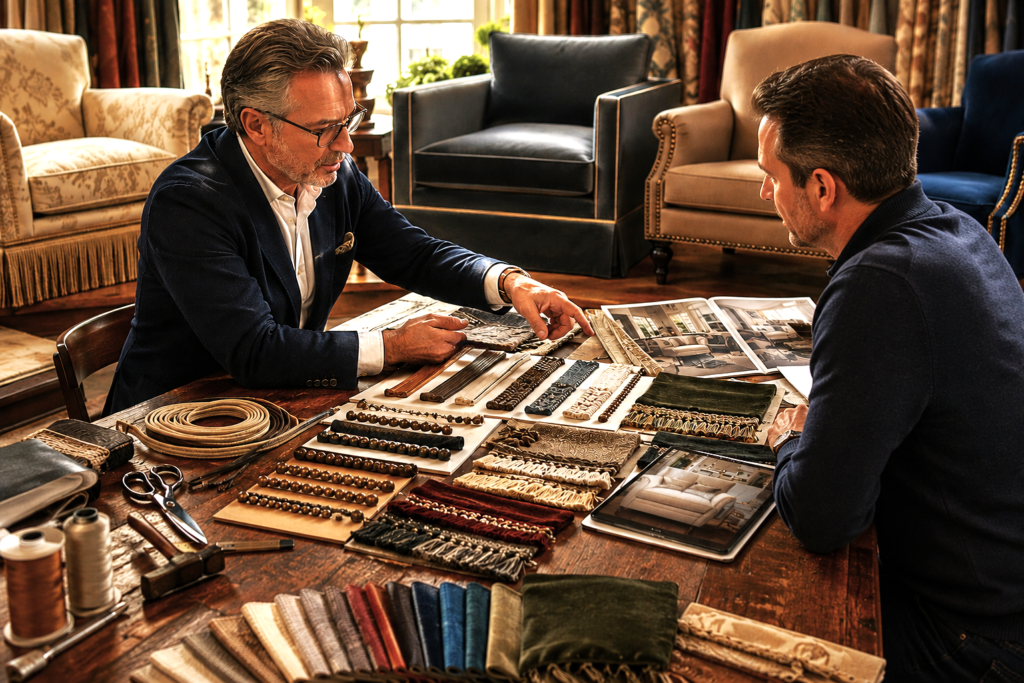
For pieces where multiple finishing options could work, we can provide samples so clients can see how different options appear. Piping colour selection particularly benefits from physical comparison rather than description. Fringing movement, texture, and scale are difficult to communicate without actual samples. The tactile and visual assessment helps clients make decisions they feel confident about.
We observe patterns in what clients ultimately select. Formal spaces tend toward traditional combinations of gimp and nails. Contemporary spaces favour piping without additional trim. Decorative pieces attract clients interested in fringing. Rather than pushing any single option, we present what works for the specific situation and let the client’s preference guide the final selection.
If you are planning upholstery work and uncertain about finishing options, send photographs of your furniture and describe how it will be used. We can discuss which finishing approaches are appropriate for your specific situation and show you examples of how different options change the final appearance. The finishing you select will be visible every day the furniture is used, the choice matters both aesthetically and functionally.
Our Services
Headboards/ Bedframes
Bespoke Loose Covers
Commercial Upholstery
Curtains & Blinds
Bespoke Upholstery
Bespoke Cushions
EXCELLENTTrustindex verifies that the original source of the review is Google. Fineupholstery are wonderful. I have used their services before. I took in an old and very interesting chair for them to re-cover. It was quite complicated and they have done an excellent job. I am thrilled with the new look. And they were so helpful with fabric choice. I felt looked after and will happily to continue using their expert recovering services again. Thank you to all.Posted on GoogleTrustindex verifies that the original source of the review is Google. I contacted Fineline Upholstery to ask for some help with a damaged sofa. They were very prompt, asked for all the necessary details in one email so that once that was provided they could provide a quote and then come and carry out the work. It was effortless and I am very happy with their speed and professionalism. I would definitely use them again.Posted on GoogleTrustindex verifies that the original source of the review is Google. Excellent service and beautifully reupholstered armchair. Top job from beginning to end. Thank you!Posted on GoogleTrustindex verifies that the original source of the review is Google. Friendly, reliable and excellent craftsmanship! Thanks v much :) love our “new” furniturePosted on GoogleTrustindex verifies that the original source of the review is Google. It’s not just the quality of the upholstery, which is absolutely outstanding, but also the excellent customer service. All done really efficiently with updates at every stage.Posted on GoogleTrustindex verifies that the original source of the review is Google. It was a pleasure dealing with Fineline Upholsterers. Their work is of the highest standard and we were delighted with their speedy, prompt and excellent service. I would highly recommend them.Posted on GoogleTrustindex verifies that the original source of the review is Google. I dumped a whole pile of unsatisfactory sofa seat cushions in the workshop. 2 weeks later they were delivered home all pristine and plumped. So easy. So efficient. I can’t wait for my next project!Posted on GoogleTrustindex verifies that the original source of the review is Google. Highly recommended! Fineline Upholstery could not have done more to help. We had a bed that unfortunately got damaged during a house move. Collection, return and reassembly were all carried out efficiently and professionally. The quality of the reupholstered bed could not have been better. We will certainly use again.Posted on GoogleTrustindex verifies that the original source of the review is Google. Excellent service courteous and extremely efficient. Thank you Min. Delighted with the cushions beautifully made and ready much earlier than expected. Thank you Chris.Posted on GoogleTrustindex verifies that the original source of the review is Google. Can’t recommend this company highly enough! Have now used them twice: re-padding and re-upholstery of antique dining chairs and re-upholstery of new chaise. The results were brilliant, excellently made and the customer service responsive, attentive and very efficient. Prices are fair and reasonable. Thankyou!

Our Location
Address: 63 New King’s Road, Fulham, London, SW6 4SE
Opening time:
Monday – Friday: 9:00am – 5:00pm
Saturday: 9:00am – 4:00pm
Sunday: Closed
Speak with the Team
020 7371 7073
info@finelineupholstery.co.uk
