Fineline Upholstery
Fineline Upholstery
The Fabric Handbook: Your Guide to Upholstery Materials

Upholstery fabric is categorised using measurable criteria rather than appearance alone. A fabric that looks fantastic on a bedroom chair may be completely unsuitable for a family sofa; a fabric that performs well in a private home may not meet commercial industry standards required for a restaurant. The information required to make that judgement is printed on every specification sheet, though it is not always explained. This handbook sets out what different fabric specifications mean, how fibre and construction affect performance, and which combinations tend to suit which situations.
This fabric guide covers the various elements of fabric specification section by section, including what it can reasonably be expected to indicate.
Fibre: The Starting Point
Fibre is the raw material from which yarn is spun, and it provides the foundations of what a fabric can do and be used for. Construction and finishing can impact performance within those limits, but they do not replace them.
Cotton: Breathable, comfortable, and widely available across a broad price range. Cotton absorbs dye well and holds colour reasonably in normal domestic light, though it is more susceptible to fading, staining, and wear than most synthetics. It is frequently blended with polyester to improve abrasion resistance and reduce creasing while retaining much of the natural texture.
Linen: Strong under tension and distinctive in texture, with a relaxed appearance that settles further with use. Linen creases readily and this is generally regarded as characteristic rather than defect, provided that the client is content with the appearance. Pure linen typically falls in the general domestic range for abrasion and is more sensitive to moisture and direct sunlight than synthetic alternatives. Excessive exposure to moisture in the environment for example from air conditioning or steam can cause linen to sag and stretch, excessive exposure to sunlight will cause bleaching over time. As a result of these limitations, Linen blends are often a more popular selection as opposed to pure linen.
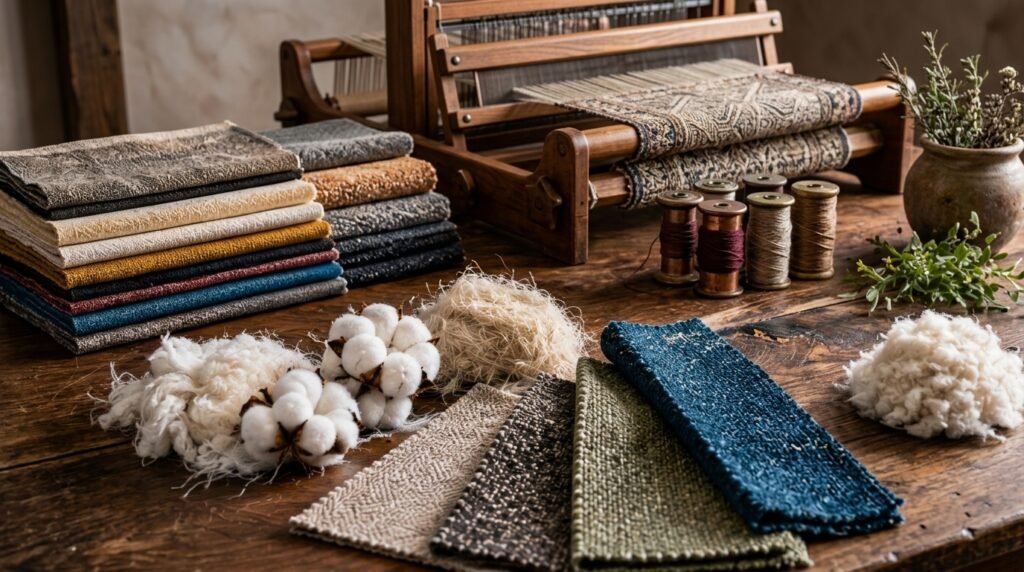
Wool: Naturally resilient, insulating, and slow to ignite. Wool recovers its shape and tension from applied pressure better than most fibres, which helps it resist matting and permanent creasing over time. It is usually more expensive than cotton or synthetic equivalents, often requires solvent-based or professional cleaning, and can be vulnerable to moth damage if untreated. Wool-nylon blends are widely used in contract work, where the nylon content raises abrasion resistance while the wool content retains the tension and natural feel.
Polyester: Durable, colourfast, and resistant to stretching, shrinking, and fading. Polyester accepts solution-dyeing, in which colour is added at the fibre stage rather than applied to finished cloth, producing colour that is held throughout the fibre rather than on its surface. It is less breathable than natural fibres and can build static, which attracts dust and pet hair. A large proportion of performance upholstery fabrics currently on the market are polyester-based or polyester-rich.
Nylon and acrylic: Nylon is among the strongest synthetic fibres used in upholstery and is generally blended rather than used alone; it can pill (loose fibre ends on the fabric surface rub together, tangle, and form small, stubborn balls called ‘pills’) and is affected by prolonged sunlight exposure. Acrylic resembles wool in appearance and warmth, resists fading well, and is common in outdoor and conservatory applications, though it can be harder to clean once stained.
Construction: Weave, Pile, and Why It Matters
Two fabrics of identical fibre content can behave very differently depending on how the yarn is assembled. Construction affects wear pattern, cleaning behaviour, and how the fabric responds to buttoning, piping, and tight upholstery work.
Flat weaves: Warp and weft yarns interlace on a loom to produce a surface with no raised pile. Flat weaves show pressure marks less readily than pile fabrics; they are generally more straightforward to clean and are the more forgiving option where furniture receives constant use. Tighter weaves tend to resist snagging better than loose ones, which is a relevant consideration in households with young children and pets.
Pile fabrics: Velvet, chenille, and corduroy carry additional yarns standing perpendicular to the base cloth. The result is depth, softness, and a surface that catches light differently depending on direction. Pile fabrics require a cutting method in order for pile direction to match consistently. An additional consideration is that the pile can flatten or shade under heavy or concentrated use. Chenille is durable, but its tufts can shed, and looped constructions can snag on pet claws; performance-treated versions handle these conditions considerably better than traditional cotton or rayon ones.
Jacquards and damask: These patterns are woven into the structure rather than printed onto the surface, using contrasting weave directions so that matte and glossy areas read as a light-and-dark motif. Because the pattern is structural, it does not wear off as a print can. Woven patterns do, however, carry a repeat, which affects metreage and cutting.
Understanding the Numbers: Martindale, Pilling, and Lightfastness
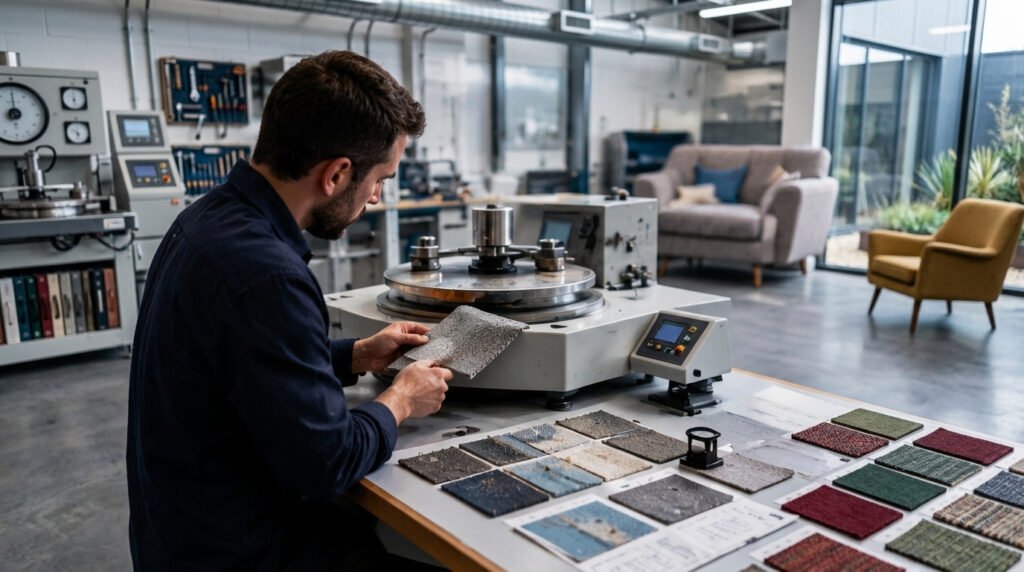
Martindale abrasion: This is an abrasion test where a 140mm circular sample is mounted over foam backing and abraded by a worsted wool disc under a constant load of 12 kilopascals, roughly the pressure of a seated person. The upper plate moves in a figure-of-eight motion so abrasion is applied in several directions rather than a single line. The machine runs in intervals, and the count at which visible wear appears becomes the rating.
The most commonly used bands and their corresponding usages are: under 10,000 rubs, decorative use only, meaning cushions, throws, and blinds rather than seating; 10,000 to 15,000, light domestic use such as an occasional chair; 15,000 to 25,000, general domestic use covering most sofas and armchairs in daily use; 25,000 to 30,000, heavy domestic; and 30,000 and above, commercial grade. For hospitality, 40,000 rubs is a sensible starting point, and heavy-duty contract work is usually specified at 60,000 or above. Some contract velvets and coated fabrics exceed 100,000 rubs.
There are two important considerations to note. Firstly, above roughly 60,000 rubs, additional abrasion resistance provides little to no meaningful benefit in most applications. Secondly, the Martindale rating measures abrasion only; it does not account for pilling, colour retention, seam slippage, or stain behaviour. Fabrics can also lose integrity for reasons which the test does not cover, including frame weakness and cushion collapse.
Pilling: Pilling describes small balls of loose fibre forming on the surface under friction. It is assessed on a scale of 1 to 5, where 5 indicates no change and 1 indicates severe pilling across the surface. A grade of 3 to 4 at 5,000 rubs is generally regarded as acceptable for domestic work; contract specifications commonly require grade 4 as a minimum. Most upholstery fabrics pill to some degree, particularly in the first weeks of use as loose surface fibres are shed.
Lightfastness: This is Measured to ISO 105-B02 by exposing the fabric to xenon light and comparing colour loss against blue reference standards. The scale runs from 1 to 8, with 8 the highest. A rating below 4 is generally not recommended for upholstery, and a fabric intended for bright, south-facing room warrants a higher figure than one for a shaded space. Solution-dyed fabrics tend to perform well here because the colour is held within the fibre.
Rub fastness (crocking): Measured by rubbing a white cloth against the fabric wet and dry, then grading colour transfer from 1 to 5. Industry guidance commonly asks for grade 4 minimum dry and grade 3 minimum wet. This figure matters most on saturated dark colours, where transfer onto light clothing is the practical concern.
A specification sheet generally gives four separate figures, not one. Abrasion, pilling, lightfastness, and rub fastness measure different properties, and a strong result in one does not imply a strong result in another. A fabric can pass 50,000 Martindale rubs and still fade badly in a sunlit room.
Fire Performance: A Legal Requirement, Not a Feature
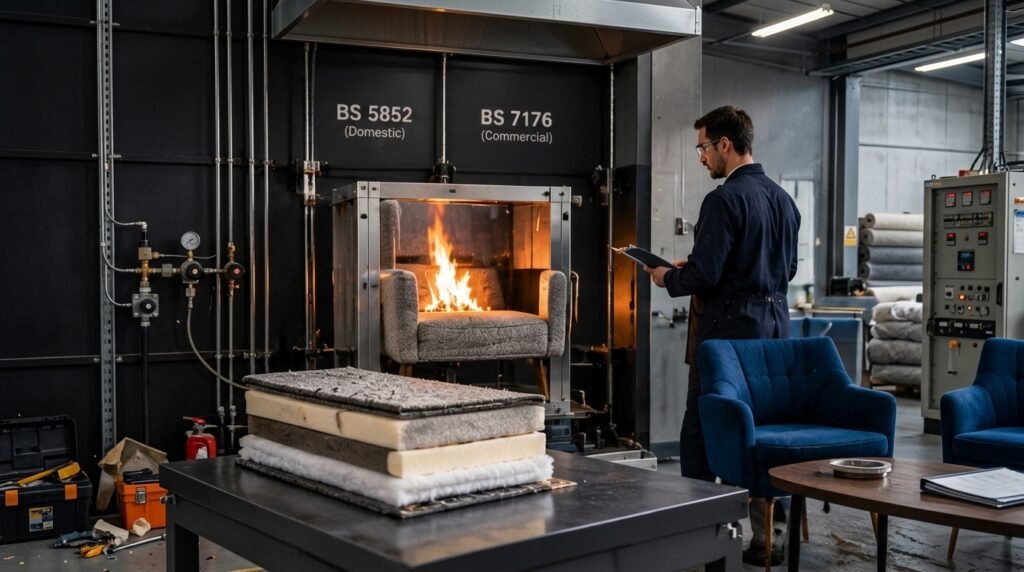
Every fabric used on upholstered furniture supplied in the UK must meet the Furniture and Furnishings (Fire) (Safety) Regulations 1988. Domestic work requires BS 5852 Source 0 (cigarette) and Source 1 (match) compliance. Commercial and hospitality environments fall under BS 7176 and, for medium hazard settings such as hotels, restaurants, bars, and healthcare, require Crib 5 (Source 5). These are not interchangeable; a domestically compliant fabric may not satisfy commercial requirements.
The tests carried out apply to the composite assembly rather than the cover fabric alone. Where a fabric is 75 percent or more natural fibre, an FR interliner fitted beneath the cover can bring the assembly up to domestic requirements, provided that the complete composite still passes both tests. This is a routine and well-established approach and it substantially widens the range of fabrics available for domestic projects.
For contract work, one caveat is worth checking directly. Full Crib 5 certification includes a water-soak stage in which the fabric is soaked and retested; a number of treated fabrics pass dry and fail after soaking. An indicative Crib 5 result without water-soak data is not complete certification and should not be relied upon for a contract specification.
Width, Repeat, and Metreage
Fabric is generally sold by the linear metre from a roll, and most UK upholstery fabric is supplied at approximately 140cm wide. Because the roll width is fixed, the quantity required depends on how efficiently the pattern pieces can be cut from it.
Pattern repeat: The repeat is the distance before a design starts again, measured vertically down the roll and horizontally across its width. Because each panel must be cut to a full repeat and dominant motifs are normally centred on visible panels, patterned fabric requires more metreage than plain. A small repeat may add around 10 percent; a large repeat can add up to 20 percent or more. On a sofa with fifteen separate panels, even a modest repeat accumulates.
Railroading: Turning the fabric ninety degrees so the roll width runs across the height of the piece allows wide furniture to be covered without a vertical seam which can reduce metreage. Railroading works on plain and non-directional fabrics. It does not work on most stripes and prints, which would appear sideways, and it is generally unsuitable for velvet, where the pile direction affects how the fabric reads under light.
Waste allowance: Upholsterers add a waste factor covering mis-cuts, unusable roll ends, and matching around corners and cushions. Typical allowances run at roughly 10 percent for plain fabric on straightforward pieces, around 15 percent for patterned work, and 20 to 25 percent for tufted, buttoned, or pleated work.
How We Approach Fabric Selection at Fineline Upholstery
Clients usually arrive with a colour and a texture in mind rather than a specification. Our approach begins with how the piece will actually be used; we then relate the client’s requirements to fabric with suitable specifications for the type of usage required.
For a family sofa experiencing daily use, we recommend a Martindale figure in the heavy domestic band or above, a pilling grade of 4 where available, and a lightfastness rating appropriate to the room’s light. For an occasional chair used infrequently, a lower abrasion figure is generally sufficient, which opens up fabric options that would not be suitable for a frequently used chair. We advise based on usage rather than recommending the highest specification by default, since a heavier fabric is not automatically the better choice for a piece that does not need it.
We are transparent about the characteristics of natural fibres. Linen creases and cotton fades more readily than polyester; these are properties of the fibre rather than defects, and clients who understand them in advance are rarely disappointed by them later. Where a client wants the appearance of a natural fibre with higher durability, we discuss blends and performance constructions that deliver closer to that balance.
Fire compliance is established before fabric selection rather than after. We confirm whether the piece is for domestic or commercial use, then specify accordingly. Where a client’s preferred fabric is largely natural fibre and does not itself carry certification, we discuss whether an FR interliner brings the composite to the required standard. For contract work, we can check that Crib 5 certification includes water-soak data before the fabric is ordered.
Metreage is calculated based on the actual piece rather than a chart, and we confirm the figure at the point of quotation for the project. Where a client is drawn to a large repeat, we set out the additional metreage required so the cost is understood at the point of choosing rather than at sale. Where railroading would reduce metreage without compromising appearance, we will recommend this method.
We hold a number of sample books at our premises so fabrics can be assessed in the room they are intended for. Our in-store selection is only a cross-section of what is actually available from the fabric houses that we hold trade accounts with. The following link provides a list of our trusted suppliers; https://finelineupholstery.co.uk/fabrics/ specific samples can be ordered so clients can see fabrics in their own light and setting. Colours will read differently under different light; texture and drape are also difficult to judge from a photograph. We encourage clients to view samples in their intended setting at different times of day before committing.
If you are planning upholstery work and are unsure which fabric suits the piece, send us photographs of the furniture and the room, and let us know how the piece will be used and roughly how much light the space receives. We can identify the specifications that matter for that application, suggest fabrics that meet them, and confirm metreage before anything is ordered.
Our Services
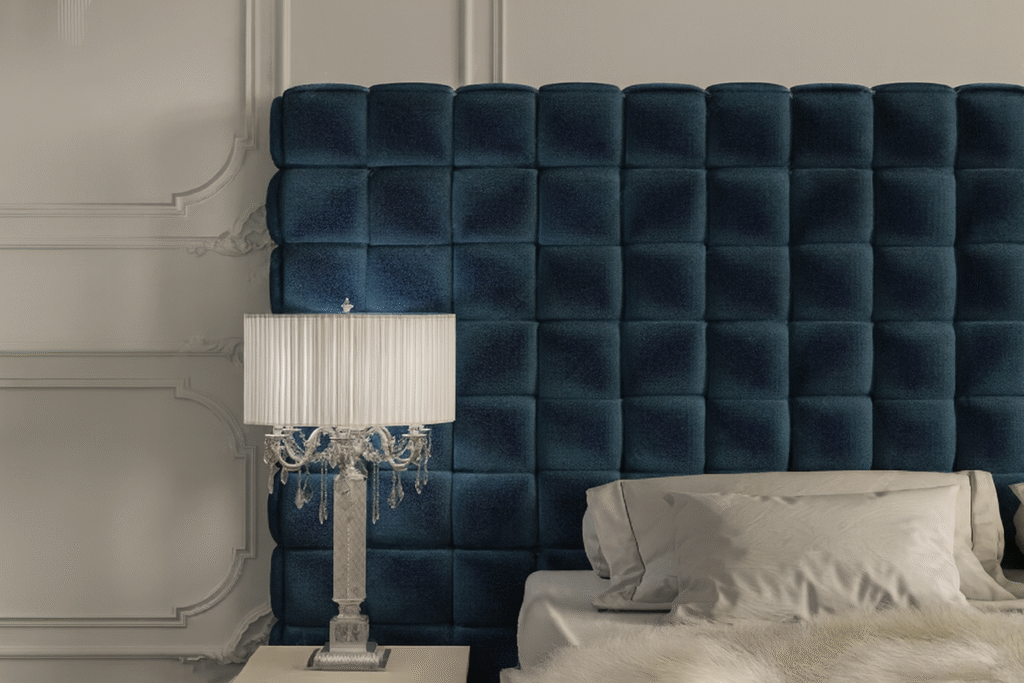
Headboards/ Bedframes
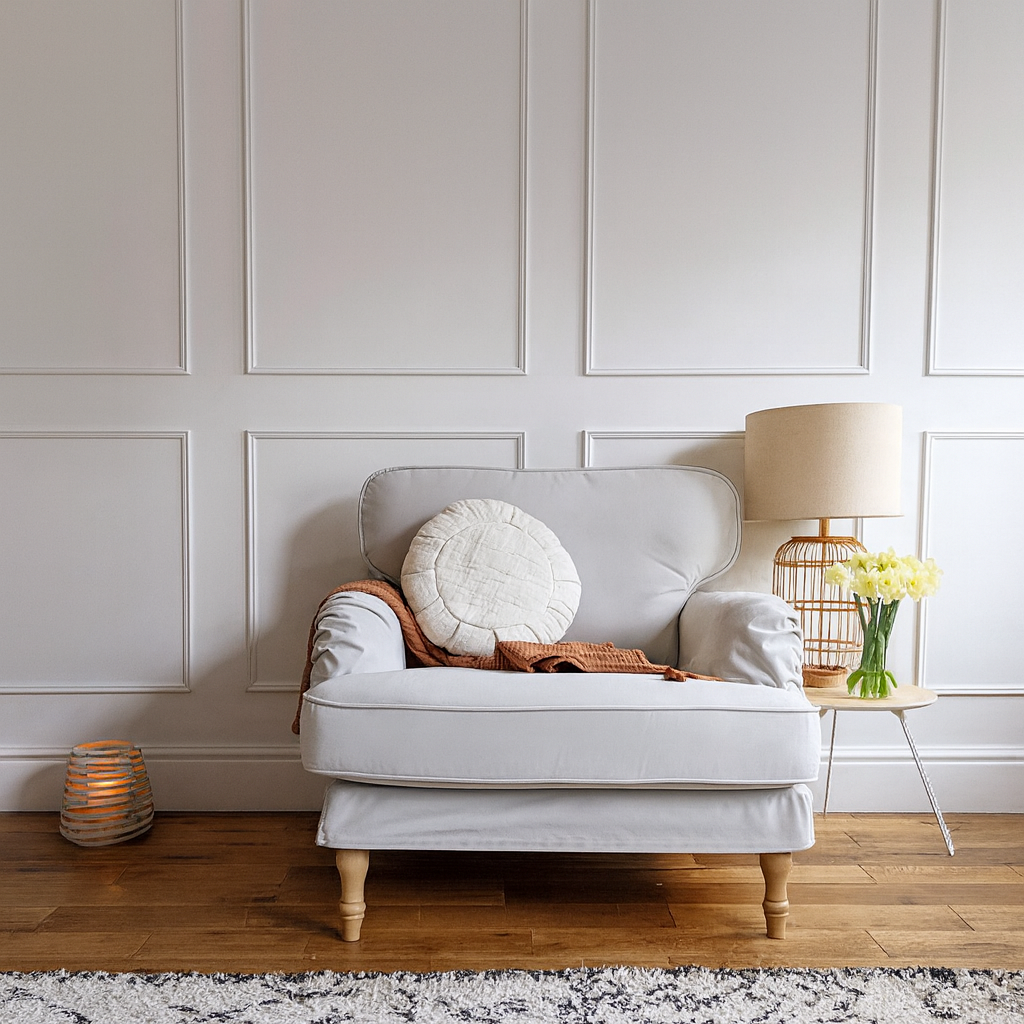
Bespoke Loose Covers
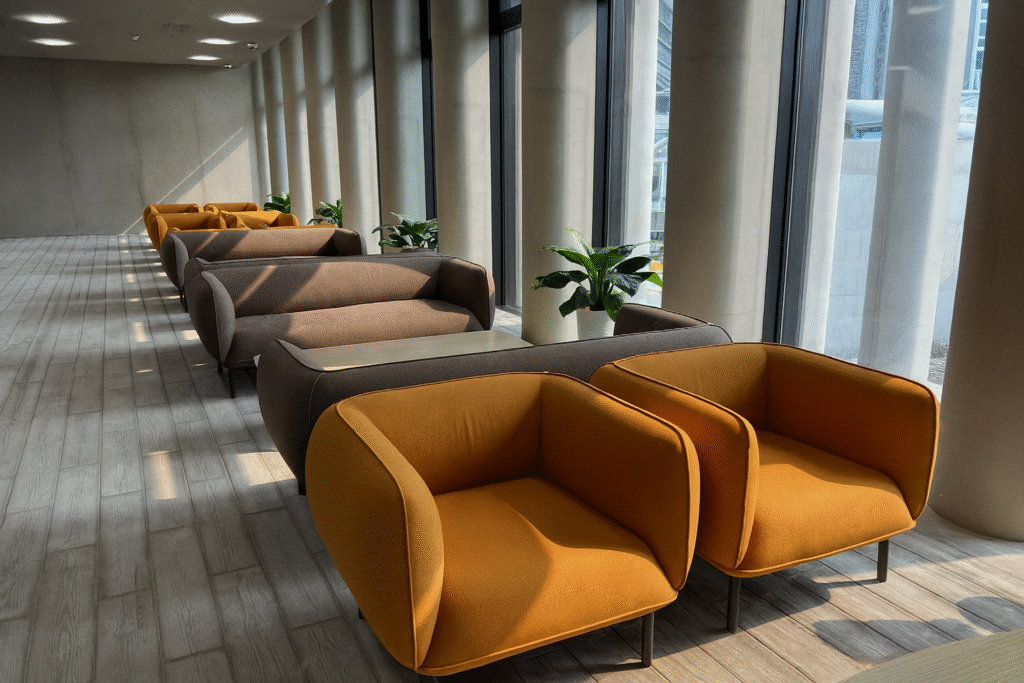
Commercial Upholstery
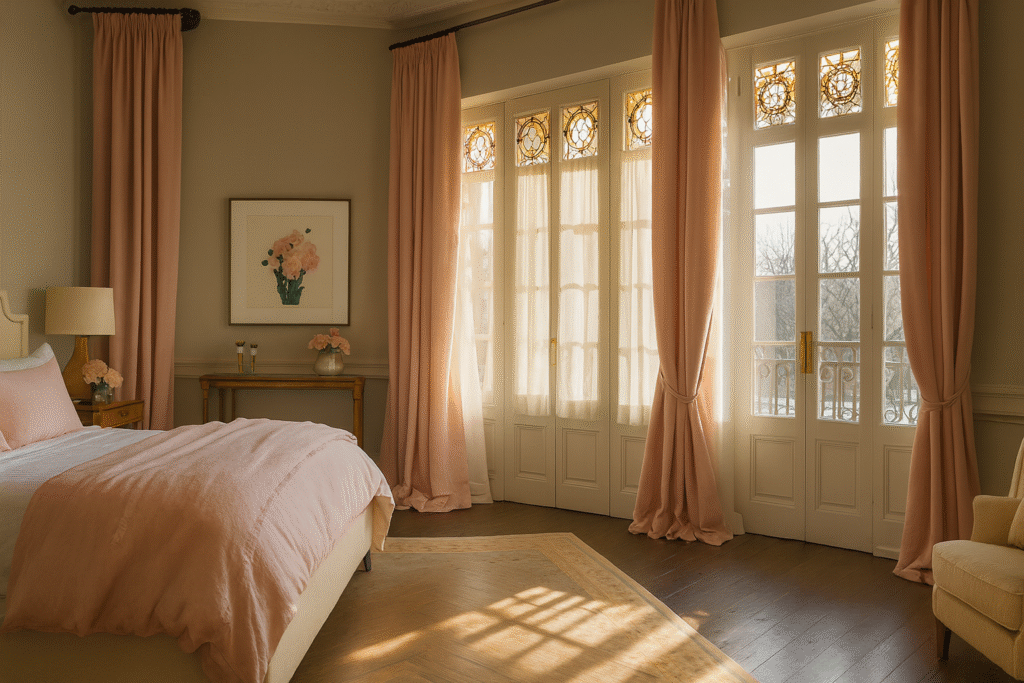
Curtains & Blinds
Bespoke Upholstery
Bespoke Cushions

Our Location
Address: 63 New King’s Road, Fulham, London, SW6 4SE
Opening time:
Monday – Friday: 9:00am – 5:00pm
Saturday: 9:00am – 4:00pm
Sunday: Closed
Speak with the Team
020 7371 7073
info@finelineupholstery.co.uk
