Fineline Upholstery
Fineline Upholstery
Cleaning and Maintaining Different Types of Upholstery Fabrics
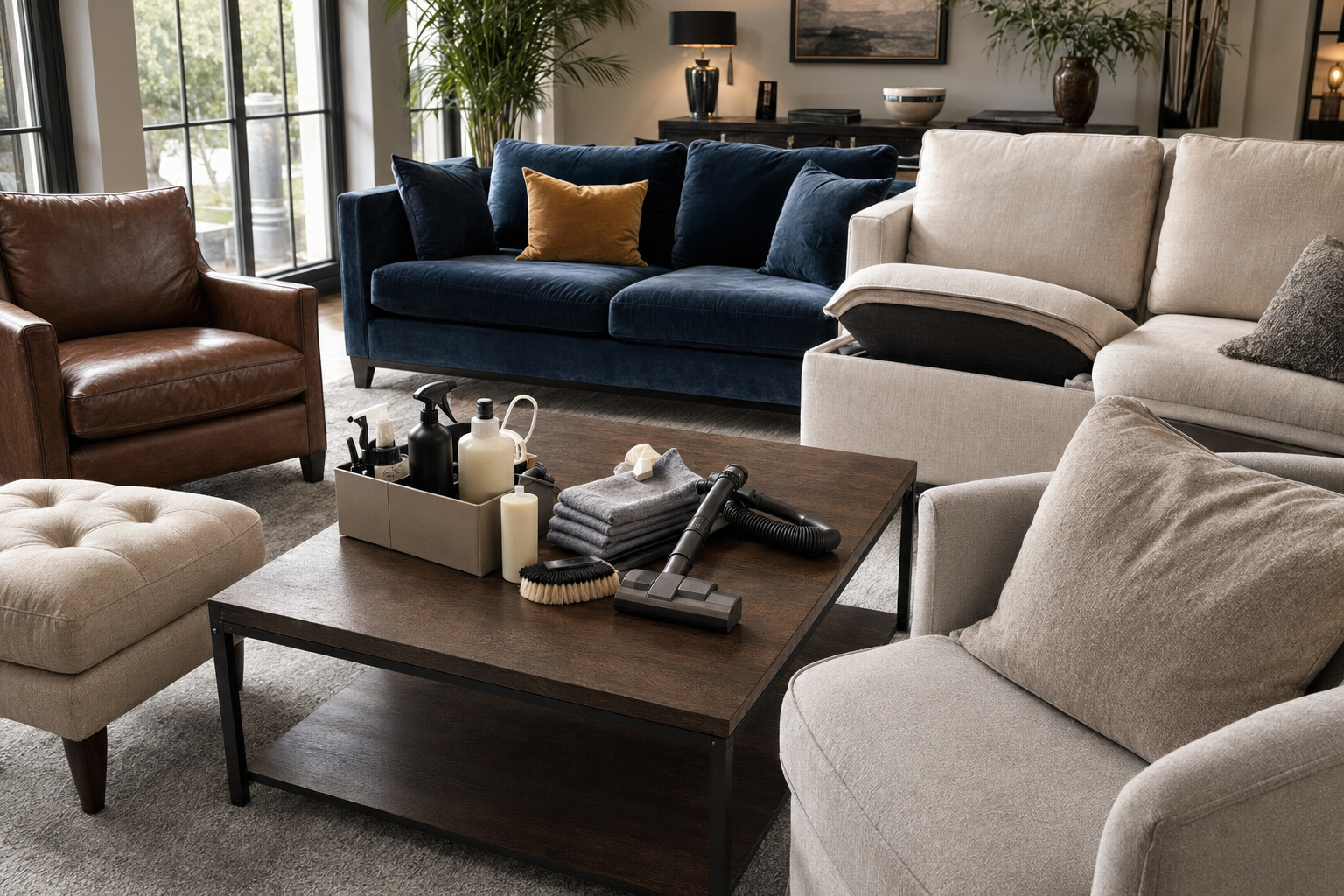
Upholstered furniture requires maintenance tailored to its specific fabric composition and construction. Different fabrics respond differently to moisture, heat, and cleaning agents. Understanding what your furniture is made from and which cleaning methods are appropriate for that material prevents damage and extends functional lifespan. Improper cleaning can result in shrinkage, colour bleeding, water rings, rough textures, or permanent fibre damage.
This article examines how different upholstery fabrics should be cleaned and maintained, establishing which methods work for which materials and when professional intervention is appropriate.
Historical Context: Function Becomes Aesthetic
Furniture manufacturers include cleaning codes on tags, typically found under cushions or on the frame. These codes indicate which cleaning methods are safe for the specific fabric and provide little to no flexibility without risk of damage.
Code W (Water-Based Cleaning): Fabrics marked with W can be cleaned using water-based upholstery shampoos and foam cleaners. This code applies most commonly to durable synthetic fabrics including polyester, nylon, and acrylic, as well as some cotton and linen blends. Water-based cleaning represents the most forgiving approach for home maintenance, though over-wetting remains a risk even with W-coded fabrics.
Code S (Solvent-Based Cleaning Only): Fabrics marked with S must be cleaned using water-free solvent-based cleaners only. Using water on S-coded fabrics, even in small amounts can cause discolouration, water rings, colour bleeding, and shrinkage. S-coded fabrics typically include delicate natural fibres such as silk, certain types of rayon, velvet, damask, and wool. These fabrics are sensitive to moisture and are unforgiving towards errors in cleaning methods.
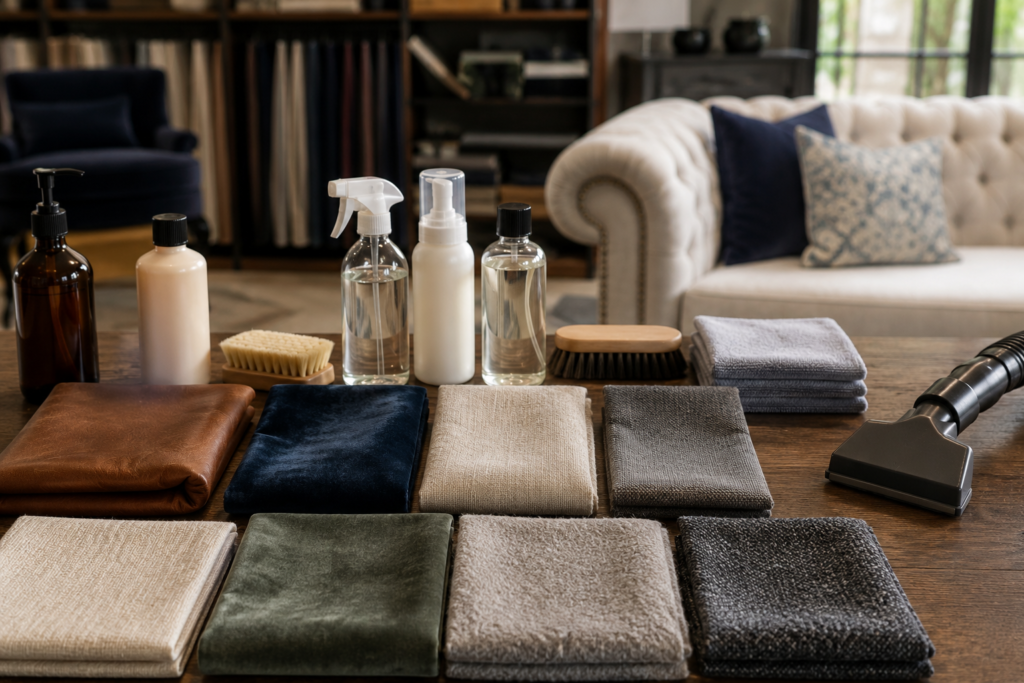
Code SW (Solvent or Water): Fabrics marked SW or WS can be cleaned using either water-based or solvent-based methods, provided that testing occurs first on an inconspicuous area. This flexibility allows for some discretion in cleaning approach, though the fabric still requires appropriate care and should not be over-saturated regardless of which method is selected.
Code X (Vacuum and Brush Only): Fabrics marked X are extremely delicate and should not be exposed to any liquid cleaning agent, whether water- or solvent-based. The only recommended cleaning methods are light brushing and vacuuming. Attempting to use liquid cleaners on X-coded fabrics will likely cause shrinking, texture distortion, or permanent damage. These fabrics require professional care for anything beyond routine vacuuming.
Check the cleaning code before attempting any cleaning. Using the wrong method causes permanent damage that cannot be reversed. When uncertain about fabric type or appropriate cleaning method, consulting a professional prevents costly mistakes.
Specific Fabrics: Cleaning Methods and Considerations
Leather: Real leather is tanned animal skin and requires gentle treatment. Vacuum loose dirt using a soft brush attachment, avoiding aggressive pressure. Wipe the surface with a microfiber cloth lightly dampened with water and mild soap solution, the goal is to remove grime, not saturate the material. Excess water damages the leather finish and can create mould or mildew. After cleaning, apply leather conditioner every 3 to 6 months to restore moisture and maintain suppleness. Professional cleaning is recommended for significant stains or when leather has not been conditioned regularly. Avoid steam cleaning, harsh chemicals, and excessive moisture.
Microfiber: Microfiber is a synthetic material celebrated for durability and stain resistance. It does not require frequent deep cleaning and can be maintained primarily through regular vacuuming with a soft brush attachment weekly. For spot cleaning, use upholstery shampoo or foam from mild detergent spray, apply sparingly and blot with a clean cloth working from the outside of the stain toward the centre. Do not rub aggressively, as this pushes the stain deeper into fibres. Allow air drying completely before use. Microfiber can accumulate dust and oils over time if not vacuumed regularly, but it generally tolerates home maintenance better than delicate natural fibres.
Velvet: Velvet requires care because its pile structure makes it susceptible to crushing and water marking. The fibre type; cotton, silk, polyester, or blended determines appropriate cleaning methods. Cotton and polyester velvets can be cleaned at home with careful application of mild upholstery cleaner, though cotton velvet may kink during cleaning and requires minimal moisture. Silk, rayon, and acetate velvets are extremely sensitive and should not be cleaned at home. For all velvets, vacuum with a soft brush attachment and blot spills immediately. When spot cleaning, use minimal liquid and blot gently. For stubborn stains, professional dry cleaning is safer than risking water marks or pile damage. A soft brush (such as a baby’s hairbrush) can be used to gently restore pile direction after cleaning, always brushing in the direction of the nap.
Cotton and Linen: These natural, breathable fibres offer comfort but lack the durability of synthetic fabrics, dirt and debris can become can become ground-in to the fabric if not maintained properly. Cotton and linen respond well to water-based cleaning methods. Spot cleaning with mild detergent or upholstery shampoo should be done carefully without over-wetting, as excessive moisture can shrink natural fibres. Professional deep cleaning every 12 to 18 months removes embedded dirt, body oils, and allergens that routine vacuuming cannot reach. Blot spills immediately to prevent absorption and set-in staining. Air dry completely after cleaning to prevent mould.
Wool: Wool upholstery requires solvent-based cleaning or professional care. Avoid water-based cleaners unless the fabric specifically carries a W or SW code. Wool can felt or shrink with overexposure to moisture. Vacuum weekly using a soft brush attachement to remove dust and prevent build-up. For stain removal, blot spills immediately with a dry cloth and consult professional cleaners for anything beyond minor surface cleaning. The fibre’s natural elasticity provides some resistance to permanent creasing compared to other natural fibres, but this benefit is lost if the fabric is over-wetted or treated harshly.
Regular Maintenance: The Foundation of Fabric Care
Consistent routine maintenance prevents the need for aggressive cleaning and extends fabric lifespan significantly. Most upholstered furniture benefits from the same basic maintenance approach across all fabric types.
Vacuum upholstered furniture regularly using a soft brush attachment, taking care not to press down aggressively allow the brush to lift dirt gently from the surface. Vacuum high-traffic pieces such as sofas weekly and headboards monthly. Increase frequency for homes with pets or children. Remove cushions and vacuum underneath, where crumbs, dust, and pet hair typically accumulate. For delicate fabrics or soft leather, avoid vacuuming altogether and instead use a soft brush to remove dust.
Blot spills immediately using a clean, absorbent cloth. Do not rub; rubbing pushes liquid deeper into fibres and spreads stains. Immediate blotting significantly reduces the likelihood that a spill becomes a permanent stain. Rotate and flip cushions if reversible to distribute wear evenly and prevent uneven soiling and indentation patterns that concentrate in high-use areas.
Keep furniture out of direct sunlight to prevent fading. Sunlight exposure causes gradual colour loss that cannot be reversed through cleaning or conditioning. For leather, exposure to UV light also increases the risk of cracking and colour fading. Protective sprays and fabric guards can provide additional protection against staining, though these products themselves require occasional refreshing and should be applied according to manufacturer instructions.
Professional Cleaning: When and Why
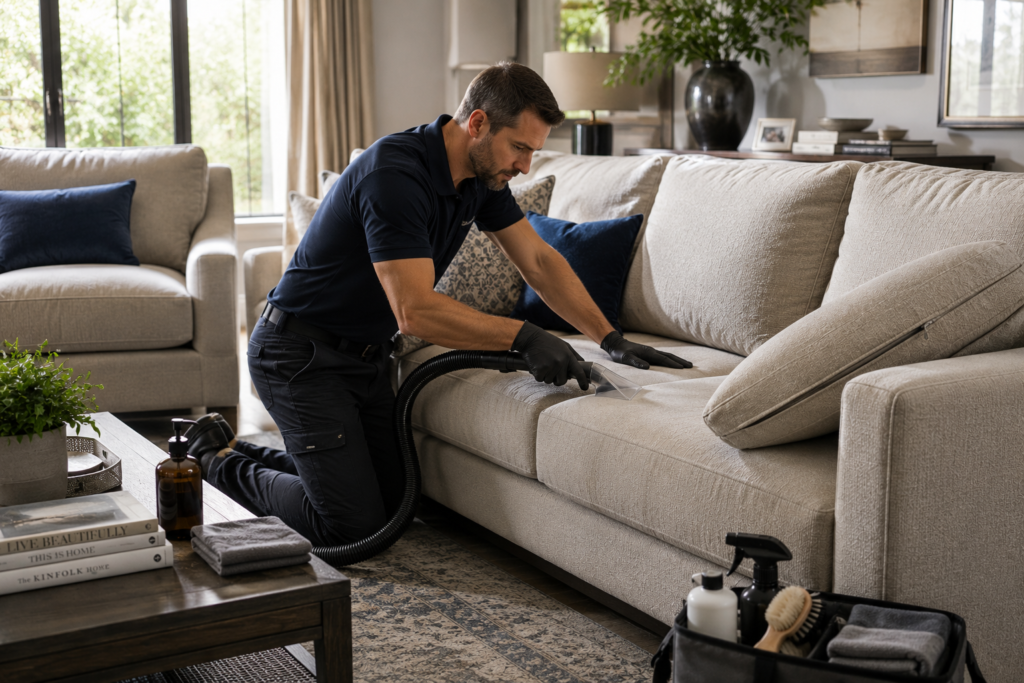
Professional cleaning extends furniture life and removes soiling that routine home maintenance cannot address. Most upholstered furniture benefits from professional cleaning every 12 to 18 months, depending on use intensity and household composition. Professional cleaners remove stubborn dirt, embedded oils, odours, and allergens that accumulate within padding and deep into fibres.
Professional cleaning is strongly recommended for S-coded fabrics, which require solvent-based treatment that home cleaning equipment cannot provide safely. It is also recommended for X-coded fabrics, where anything beyond vacuuming risks damage. For W-coded fabrics with large stains, high visibility areas (armrests, cushion tops, seams), or pieces showing overall soiling, professional cleaning ensures proper product selection, controlled moisture application, and thorough extraction that prevents over-wetting.
Professionals identify fabric type and code before cleaning, select appropriate cleaning solutions, and use equipment calibrated for extraction and removal of cleaning solution completely rather than leaving residue that attracts soiling. This systematic approach differs substantially from home cleaning methods and justifies the cost through extended fabric life and superior results.
Stain Removal: Timing and Technique
Immediate action on fresh spills prevents most stains from becoming permanent. Different stain types require different approaches.
Water-based spills (juice, wine, coffee): Blot immediately with a clean cloth to remove as much liquid as possible before it sets. For W-coded fabrics, follow with a water-based upholstery cleaner applied sparingly and blotted. Avoid rubbing, which spreads the stain. Allow air drying completely.
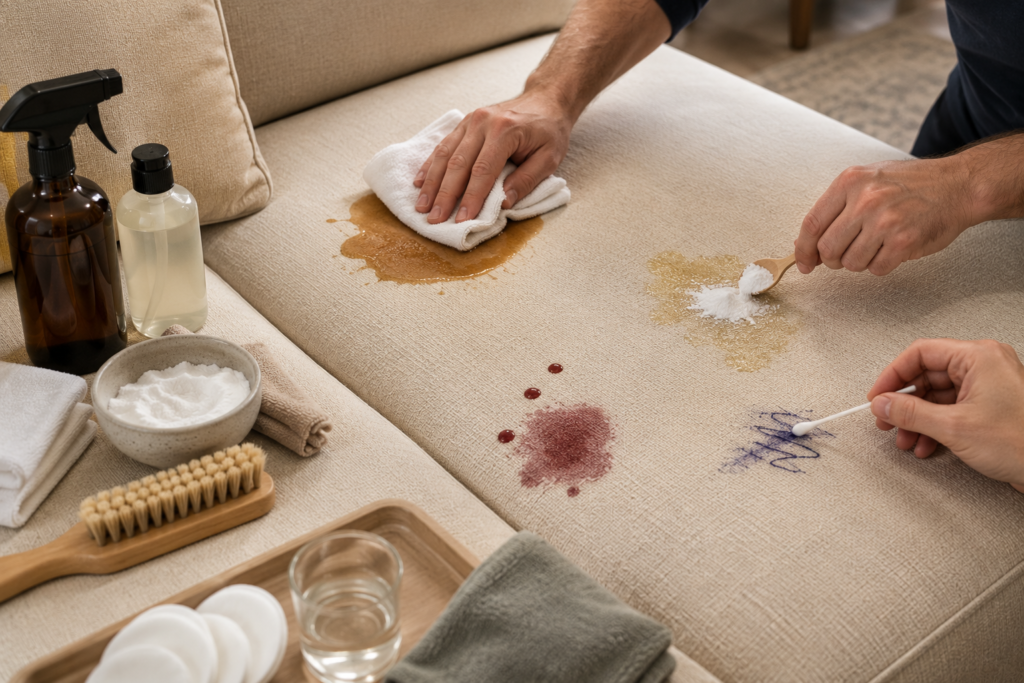
Oil-based stains (cooking oil, body oils, hair products): Sprinkle baking soda, talcum powder, or corn-starch over the spot and allow it to sit overnight to absorb the oil. Brush off gently the next day. For S-coded fabrics, consult a professional. For other fabrics, a slightly damp cloth may remove residue; finish with conditioning for leather.
Ink stains: These soak in quickly and require immediate attention. Use a cotton swab dipped in rubbing alcohol and gently dab the ink until it begins to lift. Test on an inconspicuous area first, as alcohol can affect some dyes. Do not rub aggressively.
How We Approach Fabric Care at Fineline Upholstery
Clients often do not know their fabric’s cleaning code or what cleaning methods are safe for their furniture. Our approach begins with identifying the fabric composition and locating the care tag so we understand what the manufacturer recommends.
We discuss realistic cleaning requirements during initial consultation. We are direct about what various fabric types can tolerate and what risks exist if inappropriate cleaning methods are used. We explain that some fabrics particularly S-coded and X-coded materials should not be cleaned at home, and that attempting DIY cleaning can cause permanent damage.
For W-coded and SW-coded fabrics where home maintenance is appropriate, we provide guidance on vacuuming technique, spot cleaning approach, and blotting method. We explain that the goal of maintenance is preventing accumulation of dirt and oils rather than attempting deep cleaning, which is better suited to professional intervention. We also discuss how often different furniture pieces benefit from professional cleaning based on use intensity and household composition.
When clients are uncertain about what their furniture is made from or what its cleaning code specifies, we recommend against guessing. Using the wrong cleaner causes damage that cannot be reversed; shrinkage, colour loss, water rings, and texture changes are permanent. We explain that professional assessment costs far less than replacing damaged furniture.
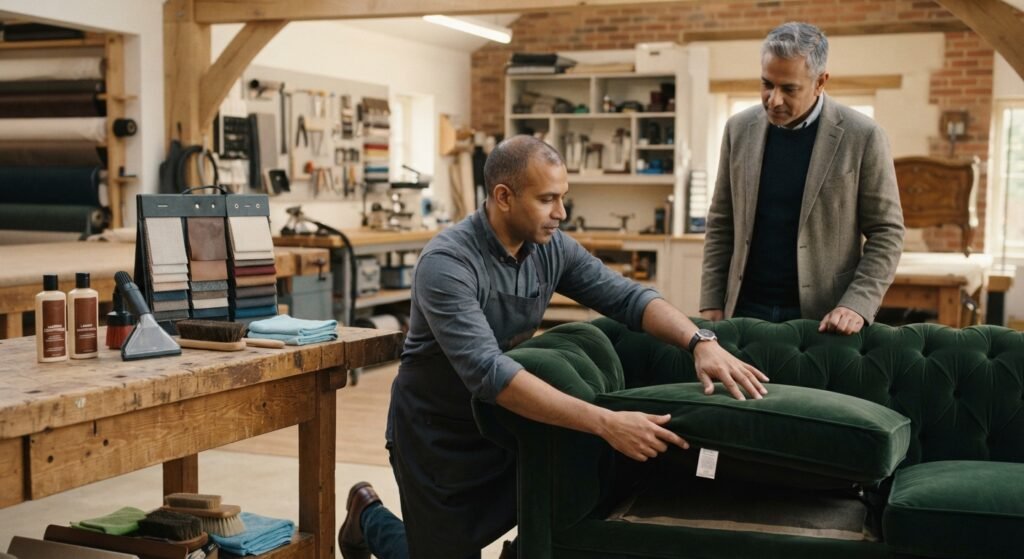
For clients with mixed fabric types across their home, we can assess each piece and provide specific maintenance recommendations. Some fabrics benefit from regular conditioning (leather). Others benefit primarily from vacuuming and immediate spill response (microfiber). Professional cleaning intervals vary based on fabric type and use.
We also discuss protective measures appropriate for specific fabrics. Fabric guards can benefit some materials while being unnecessary for others. UV protection and sunlight management matter more for some fabrics than others depending on their susceptibility to fading and damage.
If you are unsure how to clean and maintain your upholstered furniture safely, send us photographs and let us know what fabric types are present in your pieces and what regularity of usage they experience. We can assess which pieces benefit from professional cleaning, which can be maintained primarily through vacuuming and spill response, and which should not be subjected to any cleaning method beyond light brushing and vacuuming. Proper maintenance protects your investment and keeps your furniture functional for years.
Our Services
Headboards/ Bedframes
Bespoke Loose Covers
Commercial Upholstery
Curtains & Blinds
Bespoke Upholstery
Bespoke Cushions
EXCELLENTTrustindex verifies that the original source of the review is Google. Fineupholstery are wonderful. I have used their services before. I took in an old and very interesting chair for them to re-cover. It was quite complicated and they have done an excellent job. I am thrilled with the new look. And they were so helpful with fabric choice. I felt looked after and will happily to continue using their expert recovering services again. Thank you to all.Posted on GoogleTrustindex verifies that the original source of the review is Google. I contacted Fineline Upholstery to ask for some help with a damaged sofa. They were very prompt, asked for all the necessary details in one email so that once that was provided they could provide a quote and then come and carry out the work. It was effortless and I am very happy with their speed and professionalism. I would definitely use them again.Posted on GoogleTrustindex verifies that the original source of the review is Google. Excellent service and beautifully reupholstered armchair. Top job from beginning to end. Thank you!Posted on GoogleTrustindex verifies that the original source of the review is Google. Friendly, reliable and excellent craftsmanship! Thanks v much :) love our “new” furniturePosted on GoogleTrustindex verifies that the original source of the review is Google. It’s not just the quality of the upholstery, which is absolutely outstanding, but also the excellent customer service. All done really efficiently with updates at every stage.Posted on GoogleTrustindex verifies that the original source of the review is Google. It was a pleasure dealing with Fineline Upholsterers. Their work is of the highest standard and we were delighted with their speedy, prompt and excellent service. I would highly recommend them.Posted on GoogleTrustindex verifies that the original source of the review is Google. I dumped a whole pile of unsatisfactory sofa seat cushions in the workshop. 2 weeks later they were delivered home all pristine and plumped. So easy. So efficient. I can’t wait for my next project!Posted on GoogleTrustindex verifies that the original source of the review is Google. Highly recommended! Fineline Upholstery could not have done more to help. We had a bed that unfortunately got damaged during a house move. Collection, return and reassembly were all carried out efficiently and professionally. The quality of the reupholstered bed could not have been better. We will certainly use again.Posted on GoogleTrustindex verifies that the original source of the review is Google. Excellent service courteous and extremely efficient. Thank you Min. Delighted with the cushions beautifully made and ready much earlier than expected. Thank you Chris.Posted on GoogleTrustindex verifies that the original source of the review is Google. Can’t recommend this company highly enough! Have now used them twice: re-padding and re-upholstery of antique dining chairs and re-upholstery of new chaise. The results were brilliant, excellently made and the customer service responsive, attentive and very efficient. Prices are fair and reasonable. Thankyou!

Our Location
Address: 63 New King’s Road, Fulham, London, SW6 4SE
Opening time:
Monday – Friday: 9:00am – 5:00pm
Saturday: 9:00am – 4:00pm
Sunday: Closed
Speak with the Team
020 7371 7073
info@finelineupholstery.co.uk
