Fineline Upholstery
Fineline Upholstery
Different Types of Buttoning Techniques: Styles and Applications
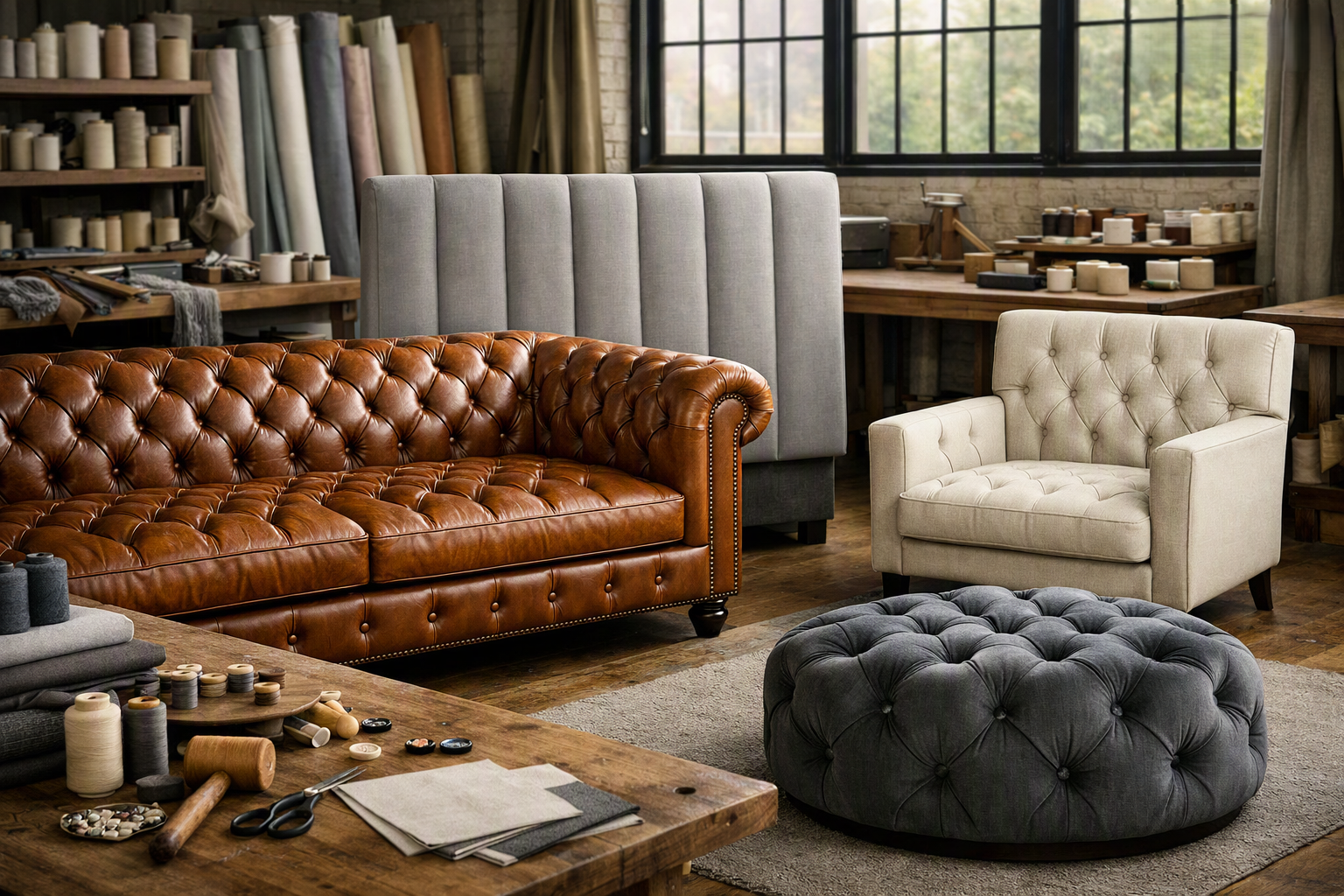
Buttoning is a fundamental technique of upholstery, it serves both functional and aesthetic purposes. The technique involves pulling fabric and padding down at regular intervals using buttons or stitching, creating textured surfaces that add visual depth and structural stability to furniture. Understanding the different methods of buttoning and their characteristics allows one to choose which technique is appropriate for a particular piece.
This article examines buttoning techniques through practical function and aesthetic effect, establishing what each method can realistically deliver and which technique should be paired with which type and period of furniture.
Historical Context: Function Becomes Aesthetic
Buttoning originated from practical necessity rather than design preference. When upholstered furniture was filled with loose fibres such as horsehair and straw, buttoning was used to hold the filling in place and prevent it from shifting and deforming the shape. This functional requirement generated what became one of upholstery’s most recognised aesthetic techniques.
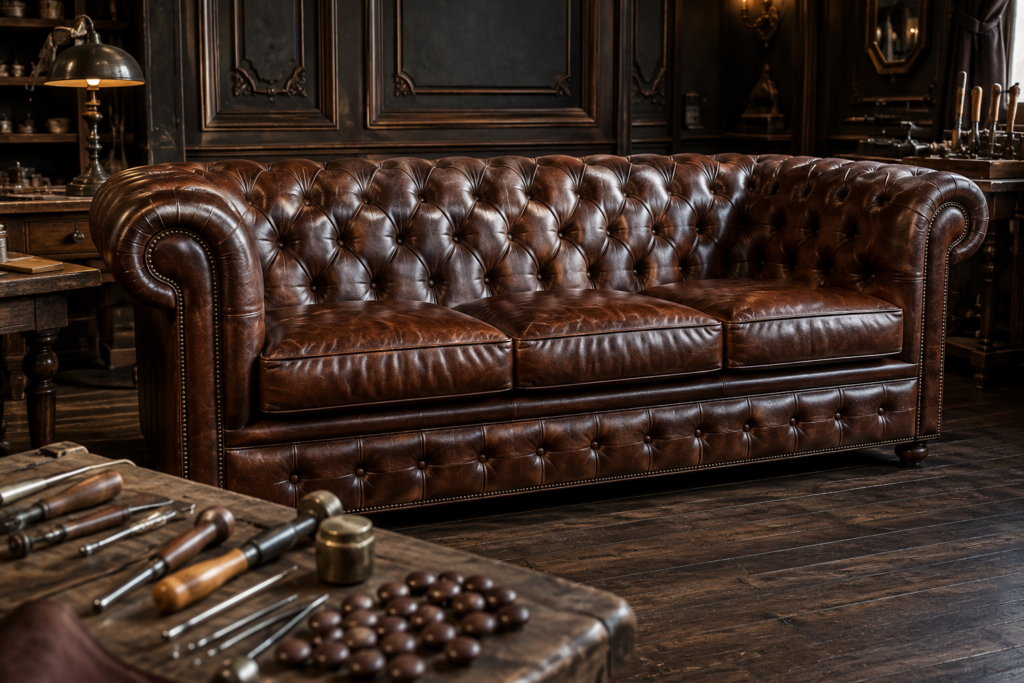
The Chesterfield sofa: The most documented example comes from the mid-18th century, when the fourth Earl of Chesterfield commissioned a piece of furniture designed to allow gentlemen to sit upright without wrinkling their clothing, a practical concern in an era when appearance and social standing were closely connected. The resulting design featured deep button tufting (also known as ‘deep buttoning’) to create a supportive surface that held the filling stable while providing a surface that did not compress or mat easily during extended use.
Deep buttoning and coiled spring suspension were incorporated around 1828 during the Victorian era specifically to improve comfort. The technique evolved from being purely functional to become the defining aesthetic of traditional luxury furniture. Despite this transition, the original practical benefit remains: buttoning holds cushioning in place and provides resistance to sagging over extended periods of use.
Buttoning Techniques: Methods and Characteristics
Diamond tufting (deep buttoning): This method creates raised diamond shapes with deeply pulled buttons. The fabric is gathered into regular diamond patterns, with buttons positioned at the deepest points. Diamond tufting requires long specialised upholstery needles and buttons which are usually hand pressed. The technique works particularly well on pieces with deep curvature such as curved backs or substantial cushioned sections, where the texture adds visual richness and indicates structural stability. This approach exemplifies traditional aesthetics and provides visual luxury through a sculptured surface.
Button tufting (square or biscuit): This creates evenly spaced buttons without necessarily forming deep diamond patterns. The indentations are typically more subtle than deep buttoning. Button tufting enhances texture and reinforces structural integrity by holding cushioning in place. This technique can be used in both classic and modern interiors, provided that the spacing and depth of buttons align with the overall aesthetic direction. The result is more uniform than hand-folded deep buttoning, though still requires skilled application.
Hand-folded tufting & Van Dyke Joining: This represents the most labour-intensive buttoning method. Fabric is carefully hand-folded around each button in ways that control how the fabric gathers and puckers. Each tuft is individually shaped, resulting in distinctive character and variation across the piece. This technique requires a skilled upholsterer experienced in precision work and typically commands the highest labour cost. The resulting piece communicates genuine craftsmanship through visibly distinct tufting character.
Sewn-in tufting with buttons: This method involves sewing the tufting pattern first, then attaching buttons. The result is more uniform than hand-folded work while maintaining visible structural character. This technique works across style ranges from traditional to contemporary and provides easier maintenance compared to hand-folded work, as the uniform surface allows simpler cleaning.
Pulled-in button tufting (no folds): This represents the least labour-intensive and most cost-accessible buttoning option. Buttons are simply pulled down without creating folds or additional stitching. The result is clean and offers little to no visible complexity, making it appropriate for traditional and modern aesthetic directions. The simplified appearance works well when design emphasis falls on other elements rather than upholstery texture.
Blind-tufting (sewn without buttons): This technique creates tufted patterns entirely through stitching, with no visible buttons. The method requires skilled work and produces a subtle textured surface. Blind-tufting works well for modern interiors seeking texture without visible hardware elements, though the technique demands upholsterer expertise and precision.
Channel tufting & fluting: This technique creates parallel straight lines or channels rather than shapes like diamonds. Channels can be shallow and flat or deeper and more pronounced, depending on design intention. This technique works across style ranges and can accommodate varied fabric patterns better than diamond tufting, provided that regular linear patterns are avoided (as they will clash with the channel lines).
Buttoning Techniques: Methods and Characteristics
The interplay between fabric pattern and buttoning technique requires careful consideration. Regular patterns, geometric grids, stripes with even repeats, and high-contrast patterns generally do not perform well with tufting. The tufting pattern creates visual folds and dimensional changes that interfere with regular fabric patterns, resulting in a jumbled, competing visual effect rather than a coherent design.
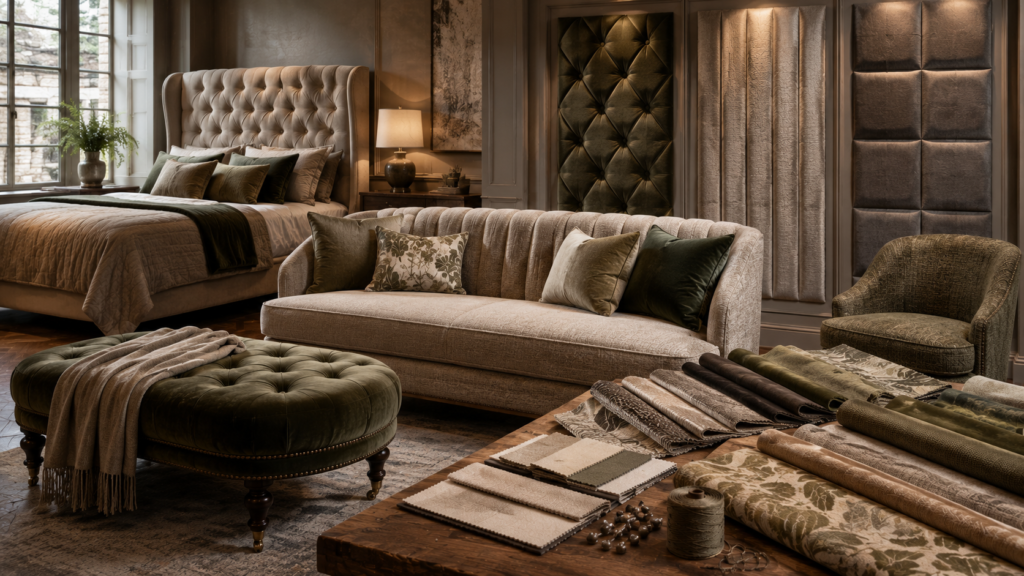
Solids, tone-on-tone patterns, monochrome designs, random florals, botanical patterns, and textured fabrics work well with tufting. These fabrics either complement the tufting pattern or, in the case of random patterns and textured surfaces, integrate with the dimensional quality of tufting without creating visual conflict. Mini-prints can work provided that the scale is small enough that the print does not fight against the tufting’s dimensional structure.
This consideration becomes important when matching client aesthetic preferences with buttoning technique realities. A client’s preferred fabric with regular geometric patterns may not perform as intended if combined with deep diamond tufting.
Buttoning and Furniture Type: Appropriate Applications
Sofas and large seating: Deep diamond tufting works particularly well on sofa backs with curved forms. The technique adds structural character to the curved surface and accommodates substantial cushioning. Button or biscuit tufting with shallower pull-down also works well, provided spacing aligns with the sofa proportions. Hand-folded tufting communicates luxury appropriate for primary seating pieces that receive moderate use and will be viewed frequently.
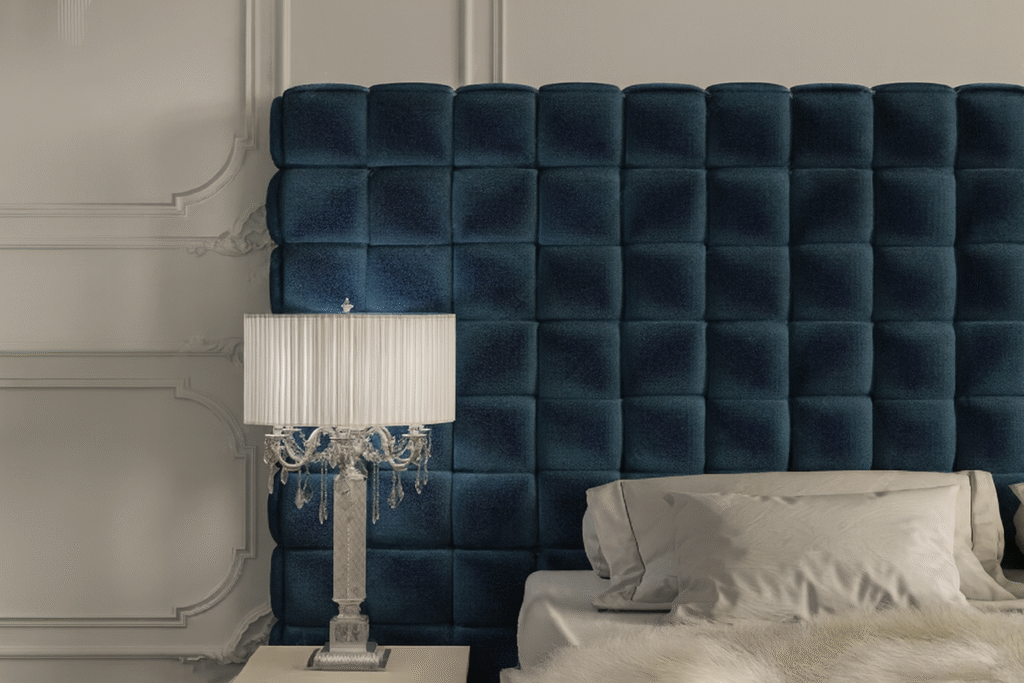
Headboards: Deep diamond tufting suits bedroom headboards particularly well, especially on headboards with substantial height and padded bases. The tufting provides visual richness to a large flat surface. Shallower channel or biscuit tufting also works, depending on overall bedroom aesthetic. Button-tufted headboards work across style ranges from traditional to modern, provided button size and spacing align with design direction.
Occasional pieces and ottomans: These smaller furniture types suit all buttoning techniques, though the visual impact and labour cost must be assessed relative to the piece size. Deep hand-folded tufting on a small ottoman becomes labour-intensive relative to the visual surface area. Pulled-in button tufting or channel tufting may provide visual interest more efficiently. The choice depends on how prominently the piece functions in the space and how central it is to the overall aesthetic.
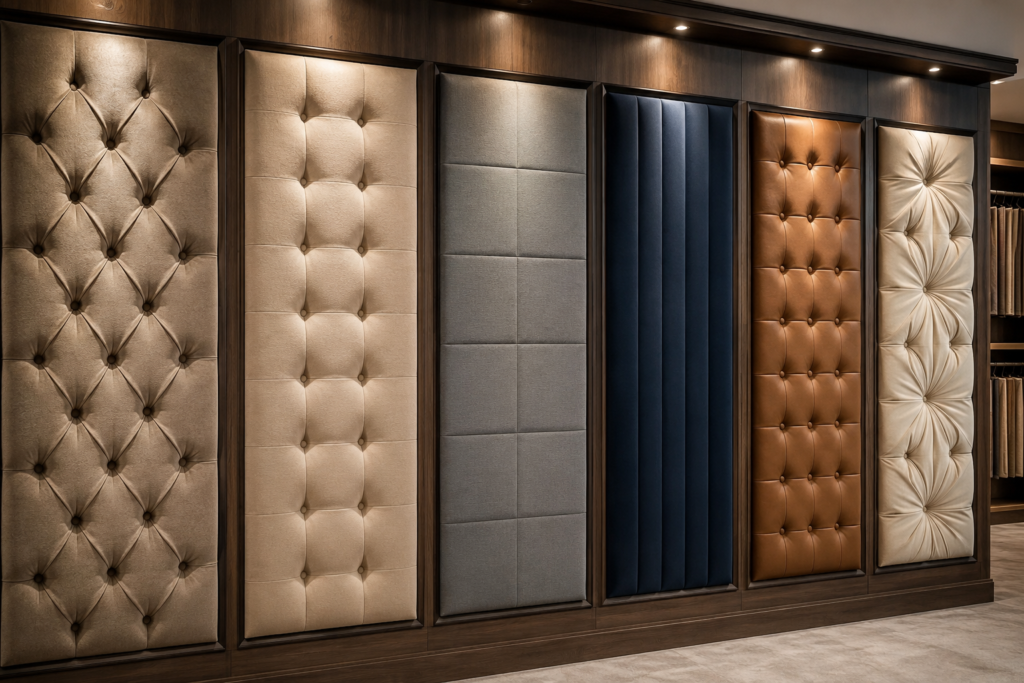
Upholstered walls and panels: Buttoning can add textural interest to upholstered wall panels when the panels are viewed from a distance typical for wall installations. Deep diamond tufting communicates richness and luxury. Shallower, more subtle buttoning provides texture without overwhelming visual impact. The scale of the space and proximity from which the panels will be viewed influences whether deep or shallow tufting is appropriate.
Labour Requirements and Cost Implications
Buttoning technique choice directly affects labour time and cost. Hand-folded tufting demands the highest labour investment due to the individual shaping of each tuft. Sewn-in tufting with buttons requires pattern sewing before button attachment. Pulled-in button tufting requires minimal additional labour beyond button attachment. Blind-tufting requires skilled precision work but may take less time than hand-folded work depending on pattern complexity.
These labour differences create corresponding cost variations. Cost-accessible buttoning options include pulled-in button tufting and channel tufting. These techniques can still provide visual interest and structural benefit without the labour intensity of hand-folded work. Conversely, pieces prioritising authentic craftsmanship, character and luxury communication typically employ hand-folded techniques, recognising that the labour investment becomes part of the piece’s value proposition.
Buttoning technique choice reflects priorities between aesthetic luxury, structural benefit, labour investment, and overall design direction. No single technique is universally appropriate; the choice depends on which combination of these factors matter most for the specific piece and client priorities.
How We Approach Buttoning Selection at Fineline Upholstery
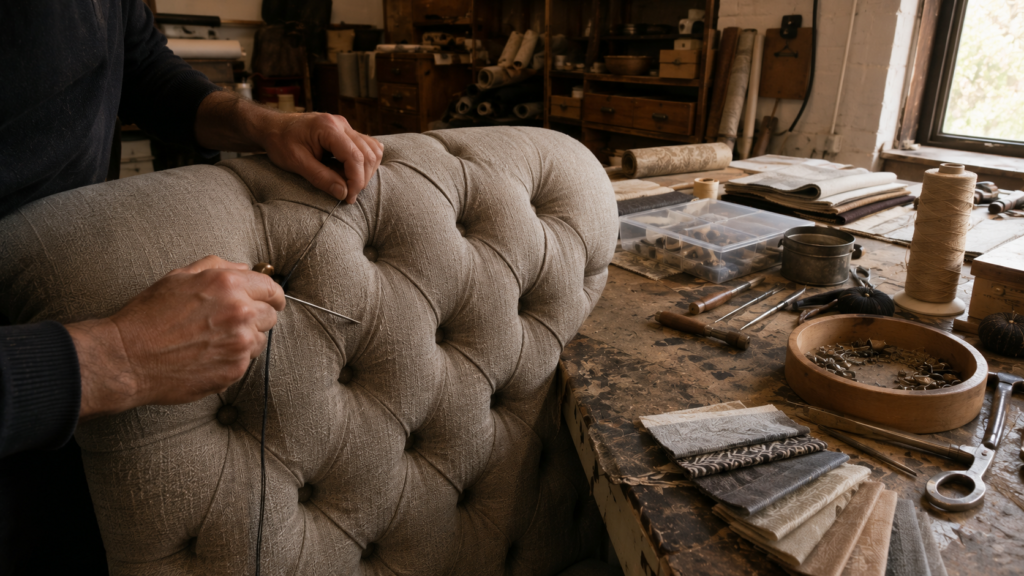
Clients often have aesthetic preferences for tufted or buttoned furniture without understanding how different techniques perform practically or what labour investment is required. Our approach begins with identifying the furniture type, intended use, visual emphasis priorities, and budget parameters.
For substantial seating pieces such as primary sofas or statement headboards, we discuss whether deep hand-folded diamond tufting aligns with client priorities. This technique communicates luxury and craftsmanship and works well when the piece will be prominently featured and receive moderate use. We explain the labour-intensive nature honestly and ensure clients understand that the hand-folded character contributes to the piece’s visual richness.
For pieces where visual interest matters but labour cost becomes a consideration, we recommend sewn-in tufting with buttons or pulled-in button techniques. These provide tufting benefits, structural integrity, and visual texture without the highest labour investment. Both techniques work across style ranges provided that button size, spacing, and depth align with overall design direction.
Fabric pattern selection requires particular attention during buttoning discussions. We identify whether client fabric preferences feature regular patterns that will conflict with tufting, and if so, we discuss whether the pattern can be adjusted or whether a different buttoning technique might work better. A client’s preferred fabric with geometric patterns combined with deep diamond tufting can produce results that feel visually competing rather than cohesive.
We also assess whether the furniture piece size and visual prominence justify the labour investment of particular buttoning techniques. Deep hand-folded tufting on a small ottoman may not provide proportional visual benefit relative to cost. Shallower techniques or alternative finishing approaches might serve the aesthetic goals more efficiently for smaller pieces.
Channel tufting is recommended when clients are looking for dimensional texture without button elements, particularly in contemporary-style spaces. The parallel lines provide visual structure and can work with a wider range of fabric patterns than deep diamond tufting provides.
We hold samples and can show how different buttoning techniques appear on similar fabric bases so clients can assess which visual result aligns with their preferences and space. Seeing how depth, fold character, and overall texture impact actual samples helps clarify whether shallow, moderate, or deep buttoning is appropriate for the specific client vision.
If you are planning upholstery work and considering buttoning techniques, send us photographs of your space and furniture and let us know what aesthetic direction and priorities matter most. We can discuss which buttoning technique aligns with your vision, labour budget, and intended use, then show you samples to confirm the approach will deliver the result you’re seeking.
Our Services
Headboards/ Bedframes
Bespoke Loose Covers
Commercial Upholstery
Curtains & Blinds
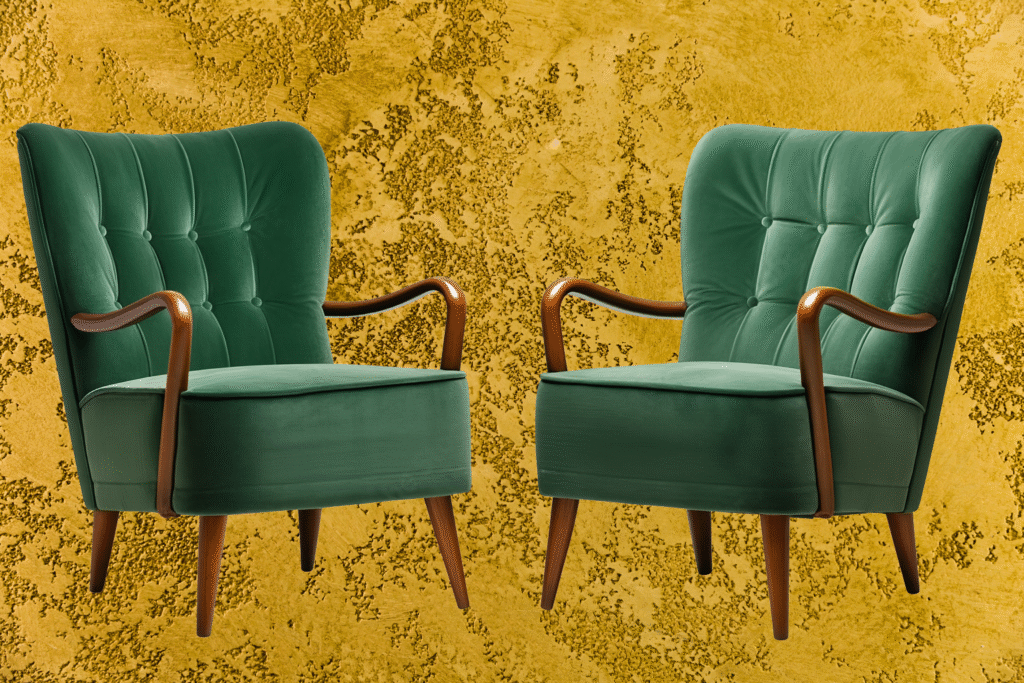
Bespoke Upholstery
Bespoke Cushions
EXCELLENTTrustindex verifies that the original source of the review is Google. Fineupholstery are wonderful. I have used their services before. I took in an old and very interesting chair for them to re-cover. It was quite complicated and they have done an excellent job. I am thrilled with the new look. And they were so helpful with fabric choice. I felt looked after and will happily to continue using their expert recovering services again. Thank you to all.Posted on GoogleTrustindex verifies that the original source of the review is Google. I contacted Fineline Upholstery to ask for some help with a damaged sofa. They were very prompt, asked for all the necessary details in one email so that once that was provided they could provide a quote and then come and carry out the work. It was effortless and I am very happy with their speed and professionalism. I would definitely use them again.Posted on GoogleTrustindex verifies that the original source of the review is Google. Excellent service and beautifully reupholstered armchair. Top job from beginning to end. Thank you!Posted on GoogleTrustindex verifies that the original source of the review is Google. Friendly, reliable and excellent craftsmanship! Thanks v much :) love our “new” furniturePosted on GoogleTrustindex verifies that the original source of the review is Google. It’s not just the quality of the upholstery, which is absolutely outstanding, but also the excellent customer service. All done really efficiently with updates at every stage.Posted on GoogleTrustindex verifies that the original source of the review is Google. It was a pleasure dealing with Fineline Upholsterers. Their work is of the highest standard and we were delighted with their speedy, prompt and excellent service. I would highly recommend them.Posted on GoogleTrustindex verifies that the original source of the review is Google. I dumped a whole pile of unsatisfactory sofa seat cushions in the workshop. 2 weeks later they were delivered home all pristine and plumped. So easy. So efficient. I can’t wait for my next project!Posted on GoogleTrustindex verifies that the original source of the review is Google. Highly recommended! Fineline Upholstery could not have done more to help. We had a bed that unfortunately got damaged during a house move. Collection, return and reassembly were all carried out efficiently and professionally. The quality of the reupholstered bed could not have been better. We will certainly use again.Posted on GoogleTrustindex verifies that the original source of the review is Google. Excellent service courteous and extremely efficient. Thank you Min. Delighted with the cushions beautifully made and ready much earlier than expected. Thank you Chris.Posted on GoogleTrustindex verifies that the original source of the review is Google. Can’t recommend this company highly enough! Have now used them twice: re-padding and re-upholstery of antique dining chairs and re-upholstery of new chaise. The results were brilliant, excellently made and the customer service responsive, attentive and very efficient. Prices are fair and reasonable. Thankyou!

Our Location
Address: 63 New King’s Road, Fulham, London, SW6 4SE
Opening time:
Monday – Friday: 9:00am – 5:00pm
Saturday: 9:00am – 4:00pm
Sunday: Closed
Speak with the Team
020 7371 7073
info@finelineupholstery.co.uk
