Fineline Upholstery
Fineline Upholstery

From Thrones to Recliners: How Padded Seating Became Standard
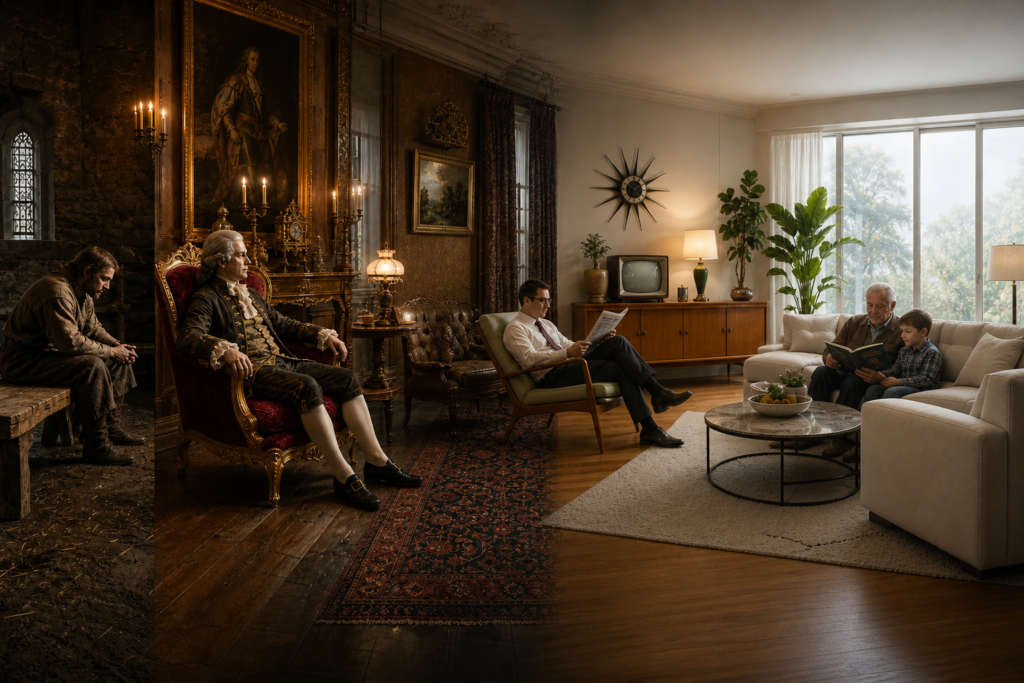
The upholstered armchair currently represents standard domestic furniture. Most households own multiple examples. The expectation of padded seating in living spaces is so normalised that its absence would be considered unusual. Throughout history this has not always been the case. For most of recorded history, comfortable upholstered seating indicated wealth and social position. The poorest members of society sat on benches, stools, or the floor.
This transition from what was considered luxury to becoming commonplace occurred through specific technological and economic developments. This article examines the historical record, the mechanisms that drove the change, and what the pattern indicates about current furniture expectations.
Upholstered Furniture as Aristocratic Privilege
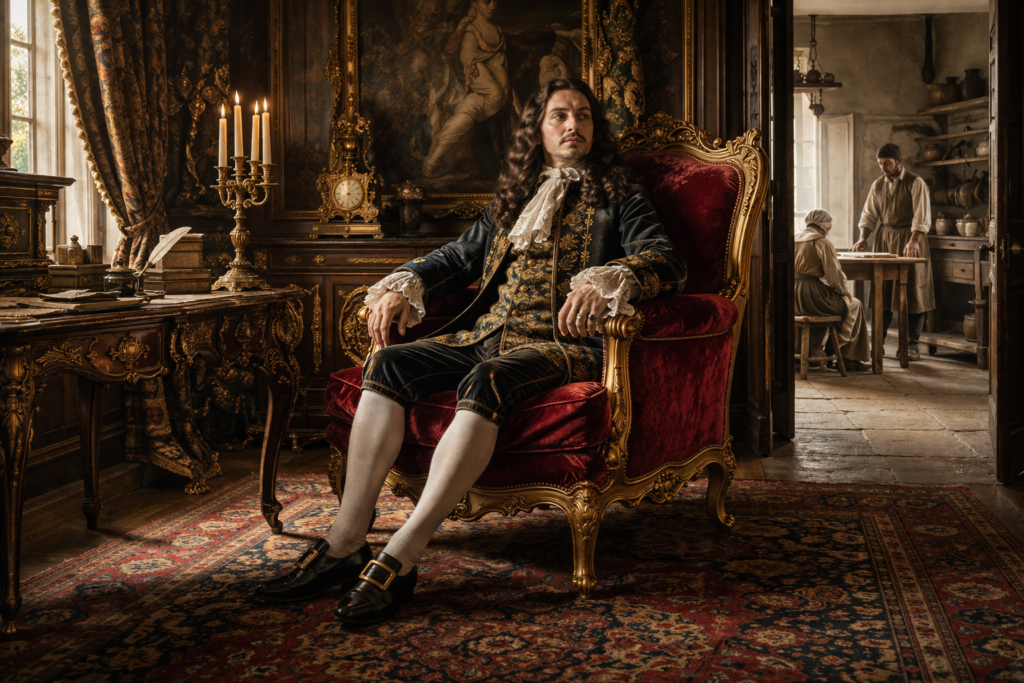
Upholstered furniture emerged in European aristocratic households during the 16th and 17th centuries. The materials required silk, velvet, brocade, horsehair stuffing, and the skilled labour to construct and maintain the pieces placed them beyond the reach of anyone outside the upper classes.
Historical records indicate that the 1680s saw the introduction of the first proper armchairs. In 1705, the first fully upholstered chair appeared, termed a “sleeping chayre” because users could rest their heads against the padded sides or back. These items existed exclusively in wealthy households. The Worshipful Company of Upholders, established in London with a Royal Charter from Charles I in 1626, regulated quality standards and controlled who could practice the trade. Violation of standards resulted in fines. The guild’s existence demonstrates that upholstery represented a specialised, valuable craft.
Throughout the 18th century, this pattern persisted. Wealthy households owned comfortable upholstered furniture. Cabinet makers, including Thomas Chippendale, George Hepplewhite, and Thomas Sheraton, produced furniture for this market and published catalogues of their designs. These publications had titles such as “The Gentlemen and Cabinet Makers Director” and “The Cabinet Maker and Upholsterer’s Guide,” indicating their intended audience.
Meanwhile, the furniture available to working people remained basic. Wooden benches and simple stools predominated. In the early 19th century, the poorest people slept on piles of straw because they could not afford beds. Skilled workers by this period typically lived in houses with two rooms downstairs and two upstairs, and they kept their best furniture in the front room, which was reserved for special occasions. This furniture was not upholstered. It consisted of basic wooden pieces.
The First Technological Shift: Metal Coil Springs
The 1820s introduced the first major technological change that would eventually make comfortable seating more accessible. Metal coil springs replaced horsehair and other natural materials as the primary method of providing resilience in cushioning.
Before springs, upholstered furniture relied on layers of horsehair, wool, or cotton stuffing. This construction method had limitations. The stuffing compressed with use and developed lumps. The furniture felt progressively less comfortable over time. More importantly, producing properly stuffed furniture required substantial skilled labour and material investment.
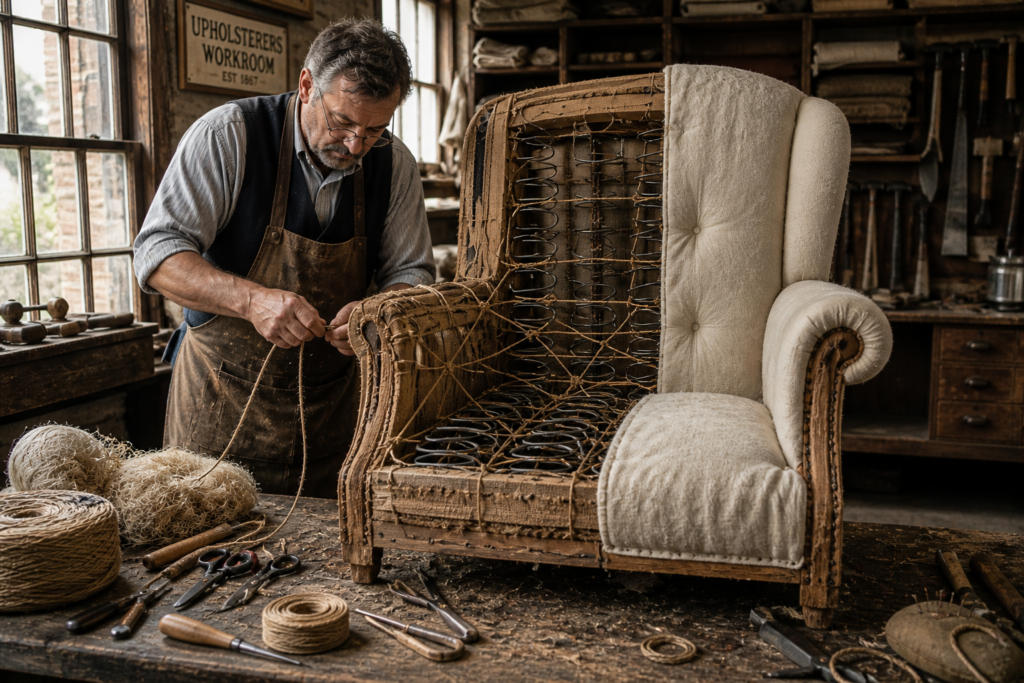
The double-coned steel spring solved multiple problems simultaneously. Springs maintained their shape under compression and returned to their original position when pressure was removed. They could be manufactured in factories rather than requiring individual craftsmanship. They reduced the quantity of expensive natural filling materials needed. The springs were held in place by lashing cord, which controlled compression direction and maintained stability.
This technological improvement did not immediately democratise upholstered furniture. Spring-based construction still required skilled upholsterers to install and finish properly. The furniture remained expensive. But the cost reduction and durability improvement established conditions for eventual wider accessibility.
The Industrial Revolution and Victorian Mass Production
The Industrial Revolution’s impact on furniture production began during the 18th and 19th centuries but accelerated during the Victorian era. Factories could mass-produce fabrics that had previously required individual weaving. Materials like velvet and damask, once available only to the wealthy, became accessible to the expanding middle class.
Victorian-era furniture reflected this transition. For the first time, furniture was mass-produced rather than individually crafted. This reduced costs but, as historical sources note, initially led to a decline in design standards. Middle-class Victorian homes contained substantial quantities of upholstered furniture; sofas, armchairs, occasional chairs, that would have been unthinkable in comparable households a century earlier.
However, this expansion remained limited to the middle class and above. Working-class households continued to have basic furniture. The improvement in their circumstances occurred gradually across the late 19th and early 20th centuries. As the 19th century progressed, more working-class families could afford houses with dedicated front rooms containing better furniture. But “better furniture” in this context still meant wooden chairs and basic tables. Upholstered seating remained aspirational.
Post-War Democratisation: 1945 to 1965
The period following World War II produced the most dramatic shift in furniture accessibility in recorded history. Multiple factors converged to make comfortable upholstered furniture standard rather than exceptional.
Economic conditions: By 1945, Americans had saved an average of 21 percent of their personal disposable income during wartime rationing, compared to 3 percent in the 1920s. When the war ended, this accumulated savings created immediate demand for consumer goods. Between 1945 and 1949, Americans purchased 20 million refrigerators, 21.4 million cars, and 5.5 million stoves. Furniture followed the same pattern. Spending on furniture and appliances increased by 240 percent during this period. Over one million new homes were built annually in the first four years after the war, and all required furnishing.
Manufacturing capability: Factories that had produced military equipment during the war converted to civilian production. They retained the mass production expertise developed during wartime. Techniques for rapid, efficient manufacture transferred directly to furniture production. Companies including Herman Miller and Knoll International established reputations for producing well-designed, high-quality, inexpensive furniture using these methods.
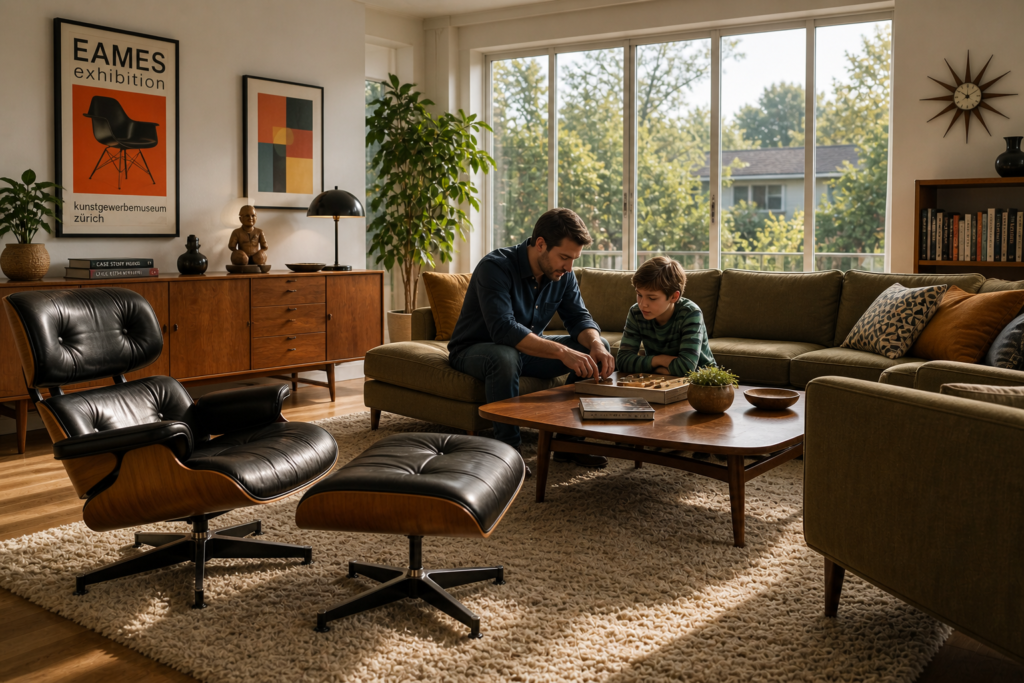
New materials: War-related material development produced moulded plywood, fiberglass, plastic resins, and aluminium suitable for furniture construction. These materials cost less than traditional hardwoods and expensive textiles while meeting durability requirements. Charles and Ray Eames pioneered moulded plywood chairs in 1946 and fiberglass chairs in 1950, with production reaching hundreds of thousands of units. These were not luxury items. They equipped schools, offices, and homes across income brackets.
Design philosophy: The mid-century modern movement explicitly prioritised accessibility. Designers rejected the notion that well-designed furniture should remain exclusive to wealthy consumers. The term “democratisation of design” appears repeatedly in period documentation. This represented a deliberate philosophical shift, not merely an economic consequence of mass production.
Data from this period indicates that lower-income families increased home furnishing expenditure, not just middle and upper-class households. The assumption that every household should contain multiple upholstered seating pieces became normalised during these two decades. By 1965, the absence of such furniture would have indicated genuine poverty, not merely modest circumstances.
The Current Baseline: What Standard Means Now
The furniture that represented luxury in 1800 and middle-class aspiration in 1900 now represents the baseline expectation. Households across income levels typically contain upholstered sofas, armchairs, and additional seating. The materials, construction methods, and durability vary substantially with price point, but the basic category of “padded, comfortable seating” is standard.
This normalisation creates specific patterns in current furniture expectations and reupholstery considerations. Clients arrive with assumptions that would have been incomprehensible to their great-grandparents. They expect furniture to be comfortable. They expect cushions that maintain their shape. They expect fabrics that tolerate regular use. These expectations are not unreasonable, but they reflect a specific historical period rather than timeless furniture characteristics.
The other effect of normalisation is that furniture quality differentiation now occurs within the category of upholstered seating rather than between upholstered and non-upholstered pieces. In 1850, the distinction was whether furniture had upholstery at all. In 2026, the distinctions involve frame construction quality, cushion fill material, fabric durability ratings, and expected lifespan. All the furniture under comparison is upholstered. The baseline shifted.
Implications for Furniture Longevity and Reupholstery
The historical transition from scarcity to abundance creates a specific challenge for contemporary furniture. When upholstered furniture represented significant investment accessible only to the wealthy, it received corresponding care and maintenance. Furniture was designed to last decades and was repaired, reupholstered, and maintained as valuable household assets.
Mass production enabled affordability but altered durability expectations. Furniture produced at lower price points uses construction methods that prioritise initial cost over long-term lifespan. Particleboard frames replace hardwood. Stapled construction replaces traditional joinery. Lower-density foam cushioning compresses permanently within years. These compromises allow the furniture to reach price points that would have been impossible with traditional construction, but the furniture will not last multiple generations.
This creates a division in the current furniture market. Budget furniture treats seating as disposable. It is used for five to ten years and then discarded. Mid-range and higher-quality furniture uses construction methods that support reupholstery and long-term use. Kiln-dried hardwood frames, proper joinery, and hand-tied spring systems enable furniture to remain functional for decades. When the upholstery fabric wears out, the underlying structure can support new covering.
The question is whether a piece of furniture was designed to be maintained or designed to be replaced. This distinction determines whether reupholstery represents a sensible investment or an attempt to preserve something that was never intended to last.
How We Assess Furniture at Fineline Upholstery
Clients often bring furniture without knowing whether reupholstery is appropriate. The historical context explains why. For 300 years, upholstered furniture represented a significant investment and was built accordingly. Contemporary mass-produced furniture breaks that association. Something can be upholstered without being worth reupholstering.
We assess frame construction first. Furniture with particleboard or plywood frames held together with staples was not designed for long-term use. The frame will not support repeated reupholstery. Furniture with kiln-dried hardwood frames joined with mortise and tenon joints, dowels, or corner blocks was designed to last. The frame can support new upholstery indefinitely.
Spring systems indicate construction intent. Furniture with hand-tied eight-way springs was built for durability. These spring systems can be retied and will continue functioning for decades. Furniture with sinuous wire springs or basic zigzag springs was built for lower cost and acceptable initial performance. These systems can be repaired but represent less substantial construction overall.
The fabric condition matters less than the structure. Worn fabric is the normal outcome of use. That is why reupholstery exists. But worn fabric on furniture with sound underlying construction presents a different situation than worn fabric on furniture with compromised frames or failing spring systems.
We observe patterns in what clients bring for reupholstery. Furniture from the 1950s through 1970s typically has construction quality that supports reupholstery. This era produced mass-market furniture but maintained construction standards that allowed long-term use. Furniture from the 1980s onward shows more variation. Some manufacturers maintained quality standards, others reduced them to reach lower price points.
When furniture has sound construction, and the client values the piece, reupholstery extends its useful life substantially. We have reupholstered pieces multiple times over the decades. The frame and springs remain sound. The cushioning can be replaced. New fabric restores appearance and function. The furniture continues serving its purpose.
When furniture has compromised construction, we discuss limitations honestly. Sometimes the sentimental value justifies reupholstery work despite structural limitations. The client understands they are preserving something meaningful to them, not making a strictly economic decision. Other times, the assessment indicates that replacement makes more sense than repair.
The historical context matters because it explains why furniture quality varies so substantially. The expectation that all upholstered furniture should last decades reflects an earlier era when upholstered furniture was expensive and built accordingly. Current furniture spans a range from disposable to investment-grade. Reupholstery is appropriate for the latter category but not necessarily the former.
If you are considering whether furniture is worth reupholstering, we can assess construction quality and discuss realistic expectations. The historical transition from luxury to standard created a wider range of furniture quality than existed when upholstered seating remained limited to the wealthy. Understanding where a specific piece falls within that range determines whether reupholstery represents a sensible approach.
Our Services
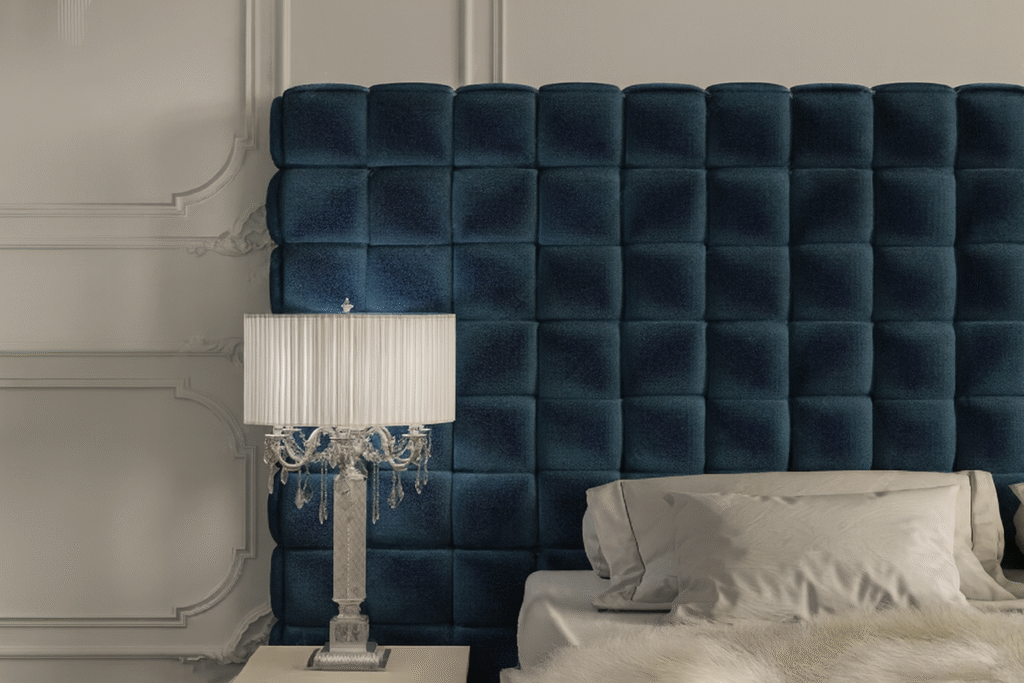
Headboards/ Bedframes
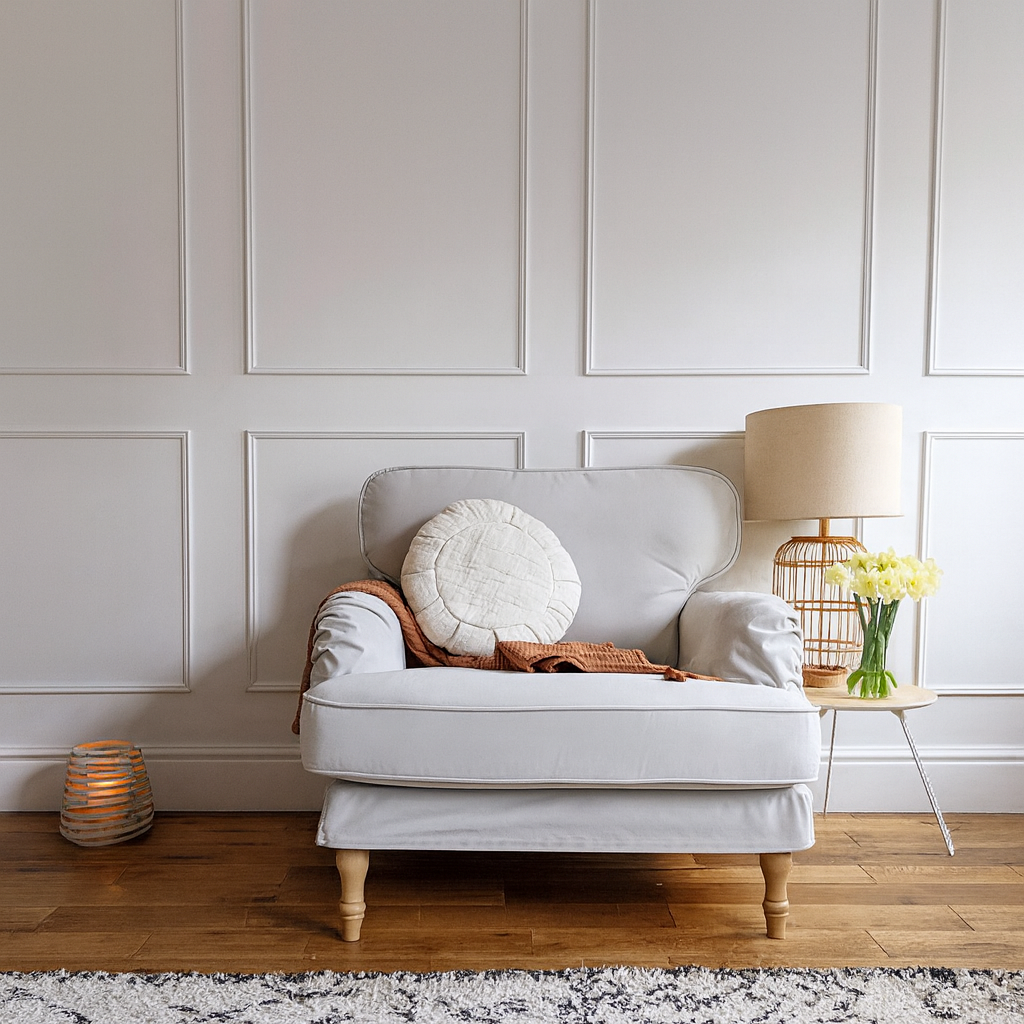
Bespoke Loose Covers
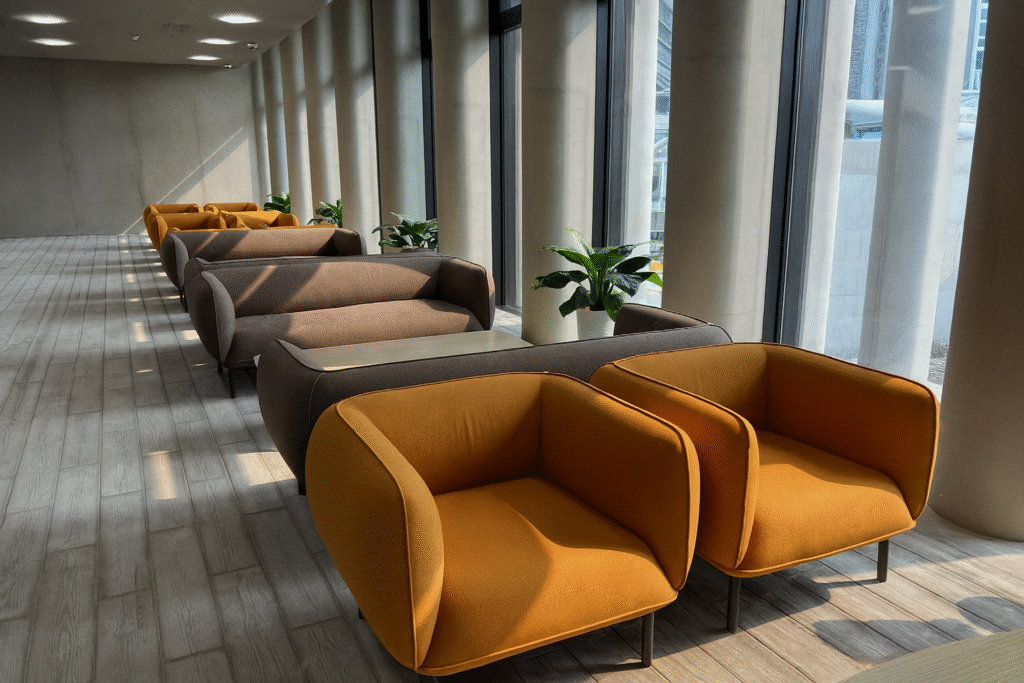
Commercial Upholstery
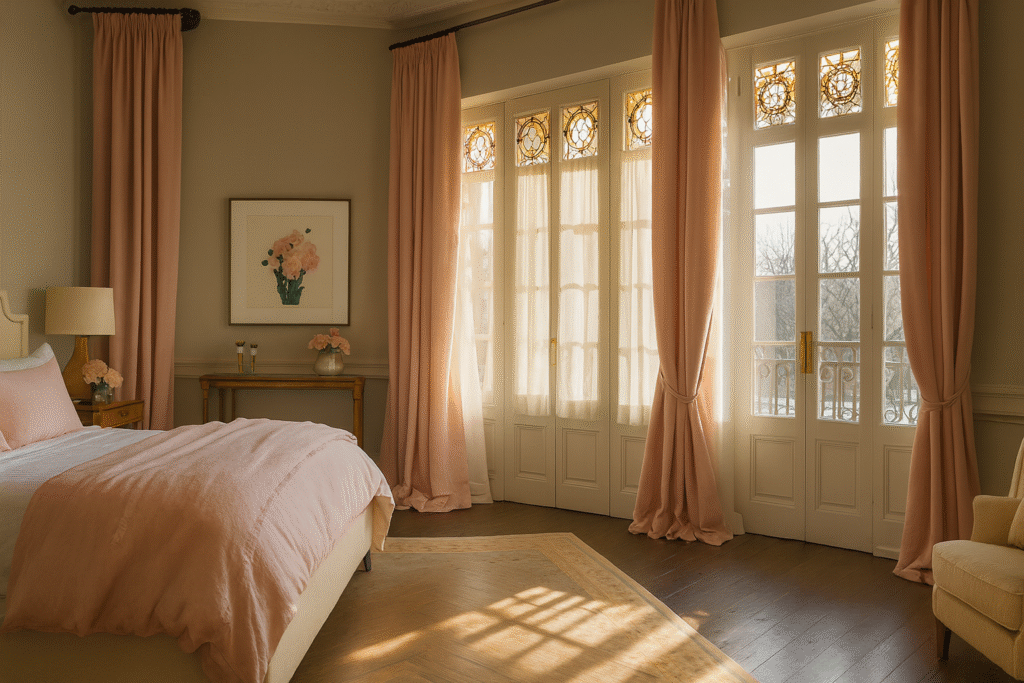
Curtains & Blinds
Bespoke Upholstery
Bespoke Cushions
EXCELLENTTrustindex verifies that the original source of the review is Google. Fineupholstery are wonderful. I have used their services before. I took in an old and very interesting chair for them to re-cover. It was quite complicated and they have done an excellent job. I am thrilled with the new look. And they were so helpful with fabric choice. I felt looked after and will happily to continue using their expert recovering services again. Thank you to all.Posted on GoogleTrustindex verifies that the original source of the review is Google. I contacted Fineline Upholstery to ask for some help with a damaged sofa. They were very prompt, asked for all the necessary details in one email so that once that was provided they could provide a quote and then come and carry out the work. It was effortless and I am very happy with their speed and professionalism. I would definitely use them again.Posted on GoogleTrustindex verifies that the original source of the review is Google. Excellent service and beautifully reupholstered armchair. Top job from beginning to end. Thank you!Posted on GoogleTrustindex verifies that the original source of the review is Google. Friendly, reliable and excellent craftsmanship! Thanks v much :) love our “new” furniturePosted on GoogleTrustindex verifies that the original source of the review is Google. It’s not just the quality of the upholstery, which is absolutely outstanding, but also the excellent customer service. All done really efficiently with updates at every stage.Posted on GoogleTrustindex verifies that the original source of the review is Google. It was a pleasure dealing with Fineline Upholsterers. Their work is of the highest standard and we were delighted with their speedy, prompt and excellent service. I would highly recommend them.Posted on GoogleTrustindex verifies that the original source of the review is Google. I dumped a whole pile of unsatisfactory sofa seat cushions in the workshop. 2 weeks later they were delivered home all pristine and plumped. So easy. So efficient. I can’t wait for my next project!Posted on GoogleTrustindex verifies that the original source of the review is Google. Highly recommended! Fineline Upholstery could not have done more to help. We had a bed that unfortunately got damaged during a house move. Collection, return and reassembly were all carried out efficiently and professionally. The quality of the reupholstered bed could not have been better. We will certainly use again.Posted on GoogleTrustindex verifies that the original source of the review is Google. Excellent service courteous and extremely efficient. Thank you Min. Delighted with the cushions beautifully made and ready much earlier than expected. Thank you Chris.Posted on GoogleTrustindex verifies that the original source of the review is Google. Can’t recommend this company highly enough! Have now used them twice: re-padding and re-upholstery of antique dining chairs and re-upholstery of new chaise. The results were brilliant, excellently made and the customer service responsive, attentive and very efficient. Prices are fair and reasonable. Thankyou!


Our Location
Address: 63 New King’s Road, Fulham, London, SW6 4SE
Opening time:
Monday – Friday: 9:00am – 5:00pm
Saturday: 9:00am – 4:00pm
Sunday: Closed
Speak with the Team
020 7371 7073
info@finelineupholstery.co.uk
